Askole (Askoli): The Last Village Before K2 and the Baltoro
By Imtiyaz Ahmed Shigri, founder of Chogori Adventure, Skardu · Updated November 2026
Askole (also spelled Askoli) is the last village before K2: a small Balti village at about 3,000 m in the Braldu valley of Gilgit-Baltistan, about 126 km or 5–7 hours by jeep from Skardu, where the road ends and the walk to the Baltoro Glacier begins. From Askole it is about 97 km on foot to K2 Base Camp. Every trek and expedition to K2, Broad Peak and the Gasherbrums, and the Snow Lake trek up the Biafo Glacier, starts here. This guide explains where Askole is, how to get there, what happens in the village at the start of a trek, the trail beyond, the weather and what to expect.

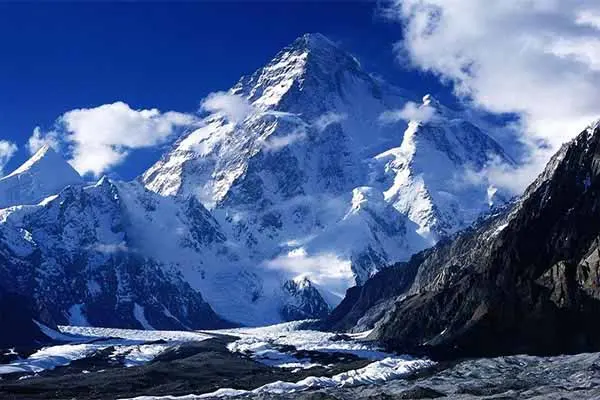
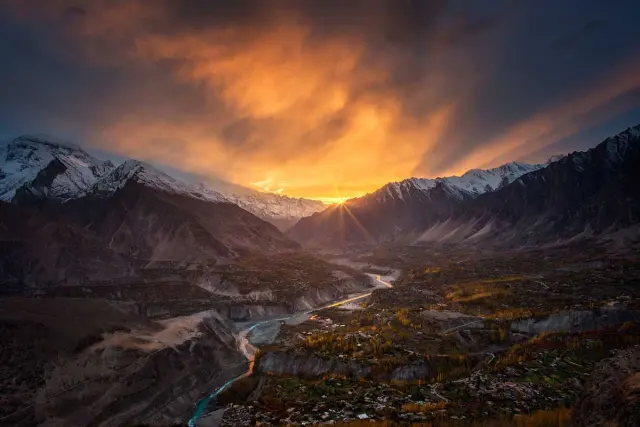
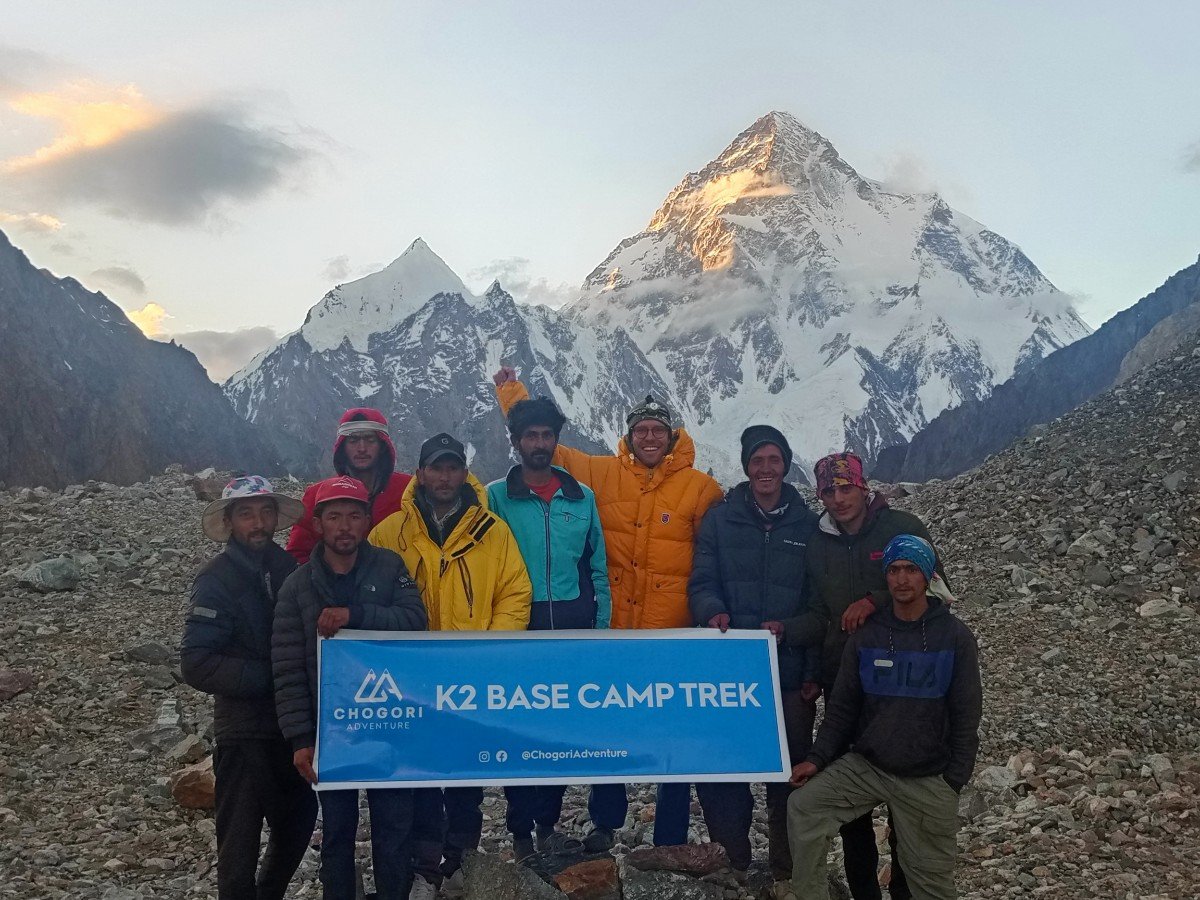
The mountains above Askole, the last village before the Baltoro.
Askole at a glance
| Fact | |
|---|---|
| Names | Askole, Askoli, Askoly |
| Where | Braldu valley, Shigar District, Gilgit-Baltistan, Pakistan |
| Height | About 3,000 m (Wikipedia 3,040 m) |
| From Skardu | About 126 km, 5–7 hours by jeep |
| To K2 Base Camp | About 97 km on foot, 8 days including a rest day |
| Last village before | The Baltoro Glacier and the Biafo Glacier |
| Where groups stay | Camping |
| Best months | June to September |
| Population | 370 in 1996 (Wikipedia) |
Where is Askole?
Askole lies in the upper Braldu valley, a side valley of the Shigar valley north-east of Skardu, in the Karakoram of Gilgit-Baltistan. The Braldu River, fed by the Baltoro and Biafo glaciers, runs past the village on its way down to Shigar and the Indus. Above Askole the valley splits: to the east, the trail follows the Braldu to the snout of the Baltoro Glacier and on to K2; to the north, the Biafo Glacier leads to Snow Lake and the Hispar La.
There are no villages beyond Askole on these routes, only summer pastures and campsites. That is why it is often called the gateway to the Karakoram giants: four of the world's fourteen 8,000 m peaks, K2, Broad Peak, Gasherbrum I and Gasherbrum II, are reached from here.
How to get to Askole
Fly to Skardu
Most travellers fly from Islamabad to Skardu (about one hour, weather permitting). Flights are often delayed by cloud, so our itineraries include a rest and spare day in Skardu. By road, Skardu is about two days from Islamabad. Before leaving Skardu, groups finish their preparations and buy last supplies.
Skardu to Askole by jeep
From Skardu the road crosses the Indus and the Sarfaranga desert to Shigar, then follows the Shigar River north and turns into the Braldu valley. The last part is a narrow, rough jeep road cut into the valley side, with river crossings and loose sections; it is regularly repaired after landslides. The drive of about 126 km takes 5 to 7 hours, usually with a stop for lunch on the way. Our groups travel in jeeps with drivers who know the road well.
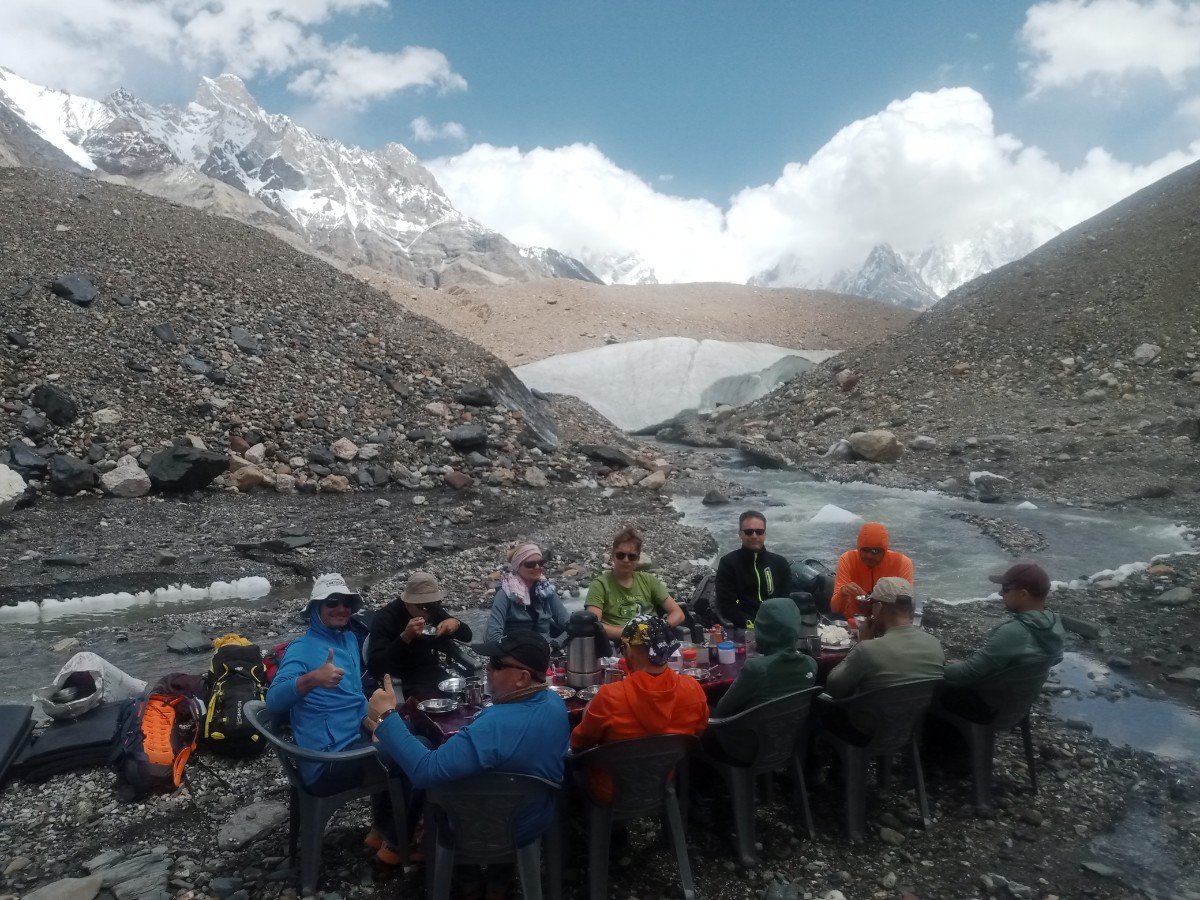
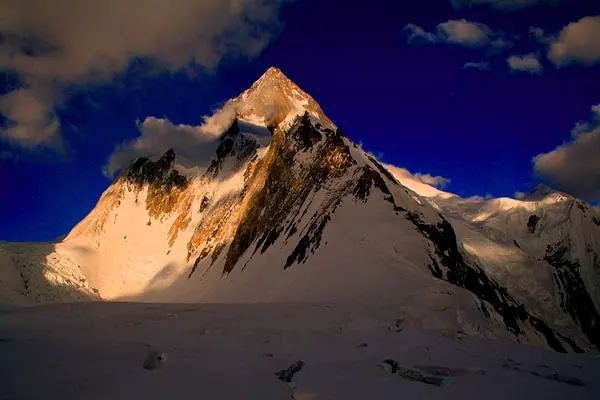
The Baltoro Glacier, reached from Askole in about two days on foot.
The village and its people
Askole is a Balti village of stone houses, small fields of barley, wheat and potatoes, and orchards of apricot and walnut, set on a terrace above the Braldu. The people speak Balti, a language related to Tibetan. Life is shaped by the seasons: farming and herding in summer, and long, cold winters when the valley is quiet.
For many families, the trekking and climbing season is also the main source of cash income. Men from Askole and the Braldu valley work as porters, cooks and guides on the Baltoro and the Biafo, and their experience on the glaciers is the backbone of every expedition. On our treks we employ local staff from the Braldu and Shigar valleys.
What happens in Askole at the start of a trek
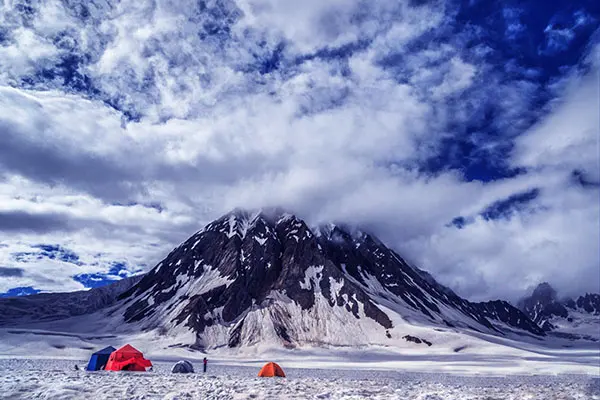
- Arrival and camp: the group arrives in the afternoon by jeep and sets up camp at the campsite near the village. On our treks we camp, with our own tents, cook and kitchen team.
- Porters and loads: the next morning porters are hired, and every load, from tents and food to your duffel bag, is weighed and shared out according to the official load limits.
- Final checks: your guide checks equipment and explains the next days; permits are checked at the national park post.
- Setting off: the trek starts with the walk to Jhula, the first camp on the way to the Baltoro.
The morning in Askole, with dozens of porters packing loads and the mountains catching the first light, is one of the memorable scenes of a Karakoram trek.
The trail beyond Askole
To K2 Base Camp
From Askole the trail follows the Braldu to Jhula (about 3,200 m), then Paju (about 3,400 m), where most groups take a rest day for acclimatisation. Beyond Paju the trail climbs onto the Baltoro Glacier: Khoburse (about 3,800 m), Urdukas (about 4,000 m), Goro 2 (about 4,300 m) and Concordia (4,691 m), where K2, Broad Peak, the Gasherbrums and Masherbrum surround the glacier. From Concordia it is a day to Broad Peak Base Camp and K2 Base Camp (about 5,150 m). In all, about 97 km from Askole, and about 195 km there and back. See our K2 Base Camp height, distance and map for every day.
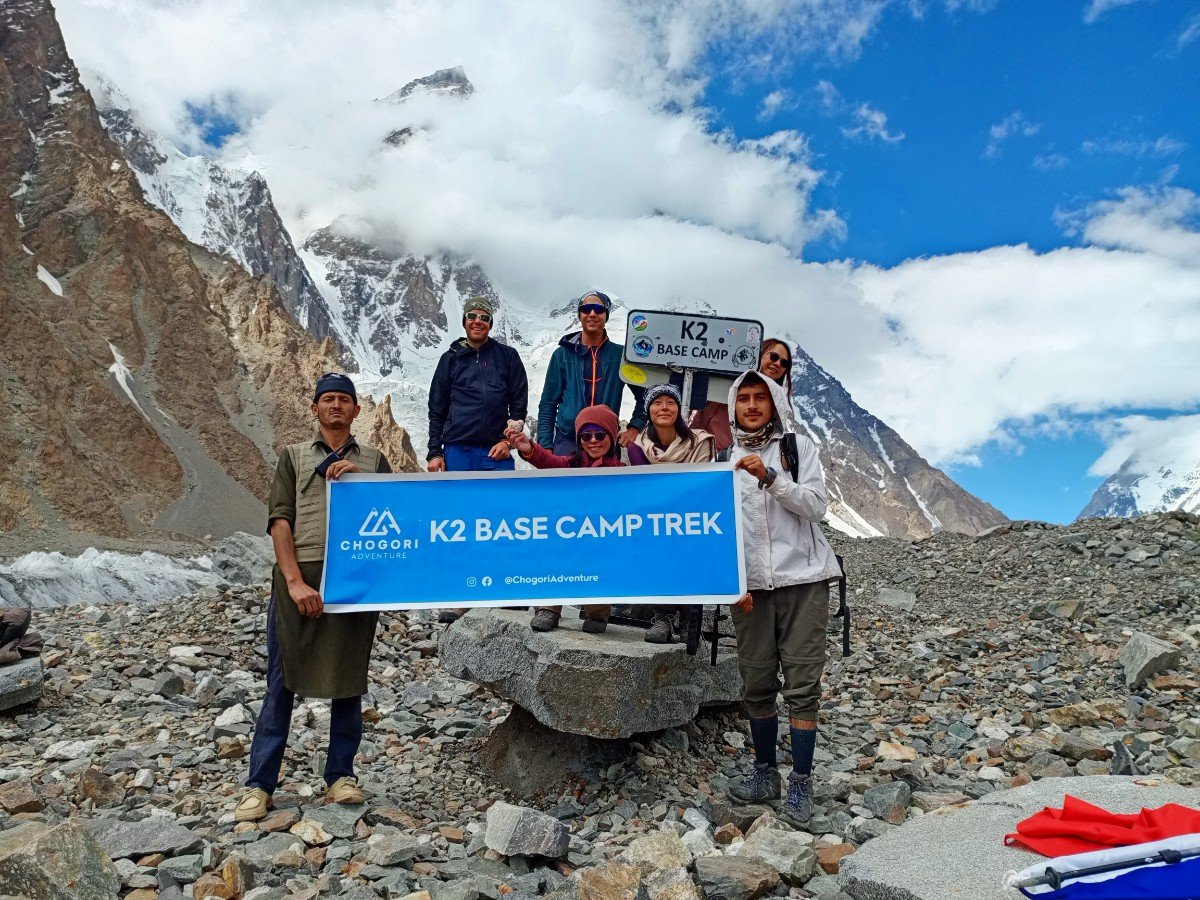
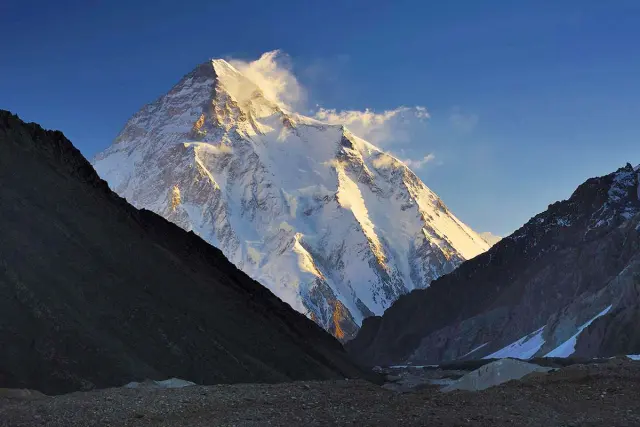
K2 (8,611 m) seen from Concordia, about a week's walk from Askole.
The first days on foot: Askole to Paju
Askole to Jhula (about 3,200 m)
The first trekking day follows the Braldu upstream, past the snout of the Biafo Glacier, across stony plains and along the river. It is a long but not steep day, often warm in the valley sun. The name Jhula comes from the old rope bridge over the Dumordo River, which is now crossed by a modern bridge. The camp lies on a terrace above the river.
Jhula to Paju (about 3,400 m)
The second day continues up the Braldu to Paju, a green campsite with trees and water just below the snout of the Baltoro Glacier. Here the first great peaks come into view: Paiju Peak above the camp and, upstream, the granite Trango Towers and the Cathedral group. Most groups spend a rest day at Paju to acclimatise before stepping onto the glacier.
Paju to the Baltoro
From Paju the trail climbs onto the moraine of the Baltoro Glacier, the long highway of ice that leads to Concordia and K2. From here on, the walking is on stones and ice, and the camps are on the glacier or its edge.
Over the Gondogoro La
Instead of returning to Askole, some treks cross the Gondogoro La (5,585 m) from Concordia into the Hushe valley, turning the trip into a traverse of the Karakoram. It is a challenging crossing on fixed ropes; see our K2 and Gondogoro La Trek.

The Gondogoro La (5,585 m), the way out to Hushe.
Up the Biafo Glacier to Snow Lake
Just above Askole, the Biafo Glacier leads north to Snow Lake and the Hispar La (about 5,130 m), and down the Hispar Glacier to Nagar and Hunza. It is the hardest trek in the region, about 115–120 km on foot with roped glacier travel; see our Snow Lake, Biafo and Hispar La Trek.

Snow Lake seen from the Hispar La, at the head of the Biafo Glacier.
Treks and expeditions from Askole
| Trip | Days from Islamabad | Highest point | Grade |
|---|---|---|---|
| K2 Base Camp Trek | 21 | K2 Base Camp, about 5,150 m | Strenuous |
| Concordia K2 Base Camp Trek (trek only) | 15 from Skardu | about 5,150 m | Strenuous |
| K2 Base Camp Trek for Beginners | 29 | about 5,150 m | Strenuous, gentler pace |
| K2 and Gondogoro La Trek | 21 | Gondogoro La, 5,585 m | Challenging |
| K2 Base Camp and Gondogoro La Pass Trek (trek only) | 15 from Skardu | 5,585 m | Challenging |
| Karakoram K2 Trek (private) | 19 | 5,585 m | Challenging |
| Baltoro Glacier Trek: K2 and Gasherbrum | 23 | about 5,150 m | Strenuous |
| Snow Lake, Biafo and Hispar La Trek | 21 | Hispar La, about 5,130 m | Challenging |
| Gondogoro Peak Climbing Expedition | 23 | Gondogoro Peak, 5,650 m | Strenuous climb |
| Pastore Peak Expedition | 25 | Pastore Peak, 6,209 m | Expedition |
The great expeditions also start here: our K2 Climbing Expedition, Broad Peak Expedition and Gasherbrum II Expedition. For a comparison of the treks, see our 10 best treks in northern Pakistan.
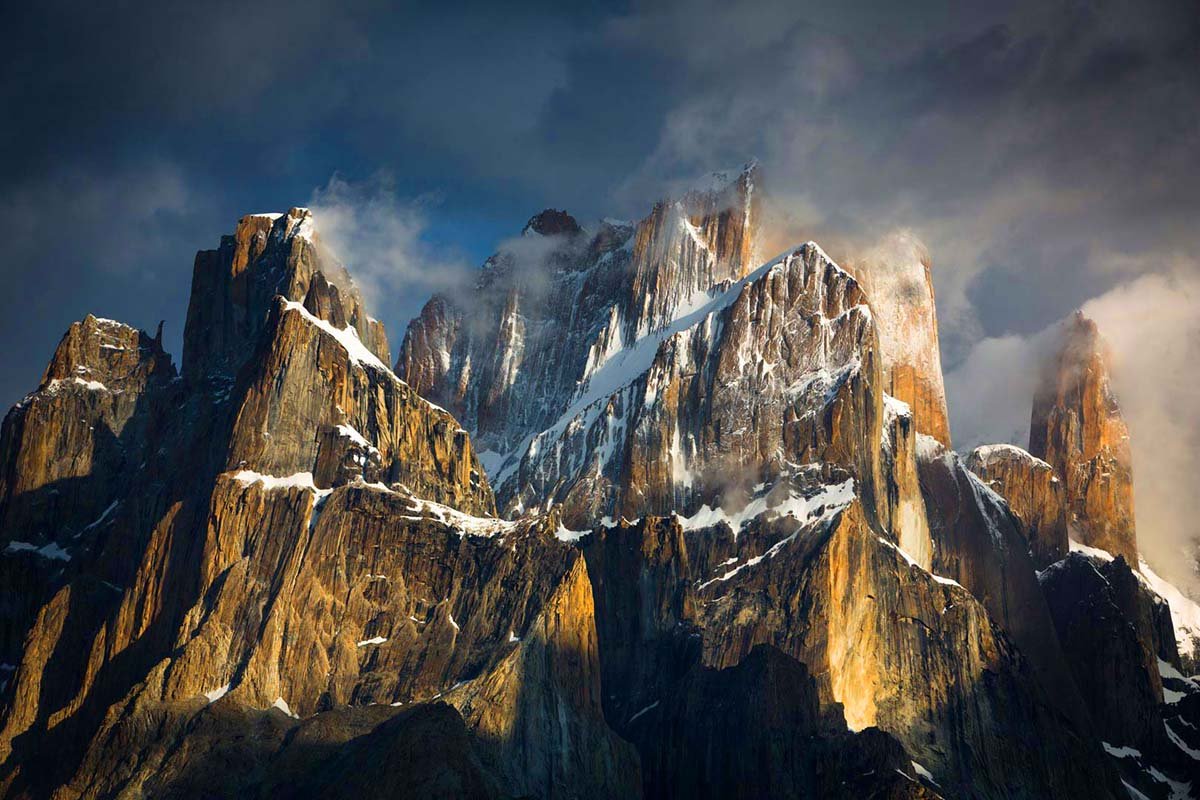
The Trango Towers, passed between Paju and Khoburse.
The porters of the Braldu valley
No expedition or trek on the Baltoro would be possible without the porters of Askole and the Braldu valley. They carry the food, tents, fuel and personal bags of every group, walking the same glacier days as trekkers with much heavier loads. Loads are weighed in Askole and shared out according to the official limits, usually about 25 kg per porter. Porters are paid by the stage, with extra payments for rest days and the return journey.
Trekkers can help by packing duffel bags carefully, keeping within weight limits, and treating porters with respect: a greeting, a cup of tea and a fair tip at the end of the trek go a long way. On our treks porters are provided with equipment and food, and we follow the official wage and load rules.
The drive and the valley
The jeep drive to Askole is part of the experience. After Shigar, the valley narrows and the road climbs high above the Braldu, with views down into the gorge and up to snow peaks. Small villages with green fields and orchards appear wherever there is water, and children often wave from the roadside. In places the road crosses side streams and fans of loose rock; drivers stop to check the way after rain, and the group may walk short sections while the jeeps cross. Allow a full day, and keep a warm layer and water handy.
Altitude and health
Askole is at about 3,000 m, already high for most visitors arriving from the plains, and the trail climbs steadily from here: Paju is at about 3,400 m, Urdukas at about 4,000 m and Concordia at 4,691 m. Walk slowly, drink plenty of water and tell your guide how you feel; the rest day at Paju and the gradual climb on the Baltoro are designed to help you acclimatise. Our guides are trained in first aid and carry a first-aid kit. Make sure your travel insurance covers trekking at altitude.
Photography in Askole
Askole is a good place for photos of village life in the Karakoram: stone houses, fields of barley, apricot trees and the busy morning when porters gather their loads. The best light is early in the morning and late in the afternoon. Always ask before photographing people, especially women and elders, and respect a "no". Beyond the village, the first camps at Jhula and Paju give the first views of the great peaks.
Returning to Askole
On the K2 Base Camp trek, the way back follows the Baltoro down from Concordia through Goro 1, Khoburse and Mongron to Korofon (about 3,100 m), and then to Askole, where the jeeps meet the group for the drive back to Skardu. After two weeks on the glacier, the green fields and trees of Askole are a welcome sight. On the Gondogoro La treks, the group does not return to Askole but walks out through the Hushe valley.
Weather and the best time to visit
There is no weather station in Askole with long-term records. The table gives the official averages for Skardu (Pakistan Meteorological Department, about 2,230 m) and an approximate figure for Askole, which is about 800 m higher and usually around 5 °C cooler.
| Month | Skardu average high / low | Askole (approximate) |
|---|---|---|
| Jan | 3 / -8 °C | about -2 / -13 °C |
| Feb | 6 / -4 °C | about 1 / -9 °C |
| Mar | 12 / 2 °C | about 7 / -4 °C |
| Apr | 19 / 7 °C | about 14 / 2 °C |
| May | 23 / 10 °C | about 18 / 5 °C |
| Jun | 29 / 13 °C | about 24 / 8 °C |
| Jul | 32 / 16 °C | about 27 / 11 °C |
| Aug | 31 / 16 °C | about 26 / 11 °C |
| Sep | 27 / 11 °C | about 22 / 6 °C |
| Oct | 20 / 4 °C | about 15 / -1 °C |
| Nov | 13 / -2 °C | about 8 / -7 °C |
| Dec | 6 / -6 °C | about 2 / -11 °C |
- June to September is the trekking season: warm days in the valley, cold nights higher up, and the glaciers passable.
- July and August are the main months for the Gondogoro La and the Hispar La.
- Spring and early summer can bring landslides on the jeep road from snowmelt; winter is very cold, and the valley is quiet.
Permits and fees
Askole itself needs no special permit, but the treks beyond it do: the Baltoro and Biafo lie in the Central Karakoram National Park, and the treks need a trekking permit and the park fee, which are checked at the start of the trail. Expeditions need a climbing permit. We arrange all permits and fees for our trips. You also need a Pakistan visa, which you apply for online at visa.nadra.gov.pk.
What to bring
- Trekking boots, camp shoes and gaiters for the moraine.
- A warm sleeping bag and a down jacket: nights on the Baltoro are below freezing.
- Sun hat, glacier glasses and strong sun cream.
- A day pack of about 30 litres; porters carry your duffel bag.
- Water bottle, purification tablets and some favourite snacks.
- A head torch, power bank and spare batteries: there is little electricity beyond Askole.
- Cash in Pakistani rupees for tips and small purchases; there are no ATMs in the Braldu valley.
Askole in history
For more than a century, almost every expedition to K2 and the Baltoro has passed through Askole. Explorers and mountaineers of the late 19th and early 20th centuries hired porters here, and the great expeditions to K2, Broad Peak and the Gasherbrums followed the same route. The village has changed slowly: the jeep road, which replaced several days of walking from Shigar, has made it easier to reach, but Askole is still the place where the road ends and the mountains begin.
Life in camp on the first nights
After the drive, the first evening in Askole is about settling in: tents go up, the kitchen team prepares tea and dinner, and your guide explains the routine of the trek. Evenings in camp are simple and sociable, with soup, rice or pasta, vegetables, daal and meat, and plenty of tea. Mornings start early, with tea at the tent, breakfast, and the walk in the cool of the day. From here on, the camp moves with you, carried by porters from the valley.
Responsible travel in Askole and the Braldu valley
Askole is a small village with limited water, firewood and space. Use the toilet tents, carry out all your rubbish, and avoid open fires. Ask before photographing people, especially women, dress modestly in the village, and respect fields and water channels. Fair wages and good loads for porters matter: our porters carry loads within the official limits, with proper equipment and food. On our treks we bring all our waste back from the mountains.
Askole and the Central Karakoram National Park
Beyond Askole, the treks enter the Central Karakoram National Park, a protected area of about 10,000 km² with four peaks over 8,000 m (K2, Broad Peak, Gasherbrum I and Gasherbrum II) and some sixty peaks higher than 7,000 m. The park has been on UNESCO's World Heritage tentative list since 2016. Trekkers pay a park fee, which is checked at the start of the trail, and the park rules ask visitors to carry out all waste and to protect the fragile glacier environment.
A typical day: Skardu to Askole
- Morning: an early start from Skardu by jeep, crossing the Indus and the Sarfaranga desert to Shigar.
- Midday: the road follows the Shigar River and turns into the Braldu valley; lunch on the way.
- Afternoon: the rough last section along the Braldu gorge, then arrival in Askole and the walk to the campsite.
- Evening: tents go up, tea and dinner, and a briefing from your guide on the days ahead.
Food and supplies
Askole has a few small shops with basic supplies such as biscuits, soft drinks and household goods, but there is little choice. Buy any snacks, batteries and personal items in Skardu before you leave. On our treks all meals are prepared by our own cook from the first evening in Askole, and fresh supplies are carried in by porters for the whole trek.
Askole in winter
From November to March, Askole is cold and snowbound, and the jeep road can be closed for days at a time by snow or rockfall. Most families stay in the village and live on stored food, while the trekking season pauses. Winter expeditions to the 8,000 m peaks still pass through, but for trekkers the season ends in September or early October.
Village life through the year
In spring, families plough the terraces and sow barley, wheat and potatoes, and the apricot trees blossom. Summer is the busiest time: fields to tend, animals taken up to the high pastures, and the trekking and expedition season, when many men are away on the glaciers for weeks. Autumn brings the harvest and the drying of apricots for the winter. In winter the village turns inward, around stoves and stored food, until the snow melts again.
How visitors can support the community
- Travel with companies that employ local guides, cooks and porters, and pay fair wages.
- Buy small items, such as dried apricots or handicrafts, directly from families when offered.
- Respect the fields and water channels; walk on paths, not across crops.
- Leave nothing behind: carry all rubbish out of the valley.
- If you want to support schools or health projects, ask your guide which local organisations are active in the valley.
Planning checklist for a trek from Askole
- Book your trek and flights well ahead for July and August, the busiest months on the Baltoro.
- Apply for your Pakistan visa online, with the letter of invitation we send you.
- Arrange travel insurance that covers trekking at altitude.
- Train for several months with long hill walks carrying a pack.
- Break in your boots and test your sleeping bag and layers before you travel.
- Keep at least one spare day at the end of your trip for flights and the jeep road.
Combining Askole with Skardu
Before or after a trek from Askole, spend a few days around Skardu: the Kachura lakes, Shigar Fort, the Sarfaranga desert and, in summer, the Deosai Plains. Shigar is on the road to Askole, so many groups stop at the fort on the way. See our guide to places to visit in Skardu and our Skardu tour packages.
Tips for your first day in Askole
- Drink plenty of water: at 3,000 m the air is dry, and the jeep ride is dusty.
- Organise your duffel bag the night before, with what you need on the trail in your day pack.
- Keep your passport and permit copies handy for the national park check.
- Walk slowly on the first days to Jhula and Paju; the rest day at Paju is there for a reason.
- Read our K2 Base Camp trek guide and Baltoro Glacier guide before you go.

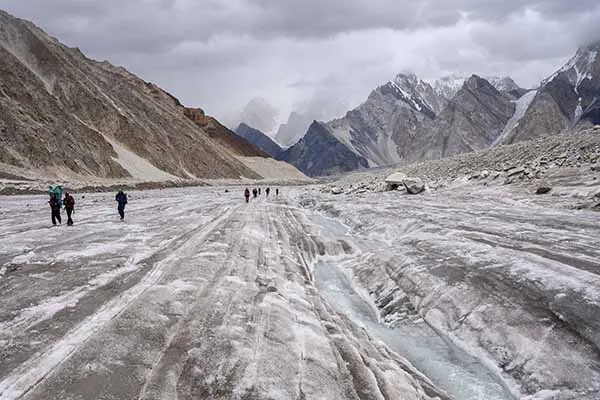
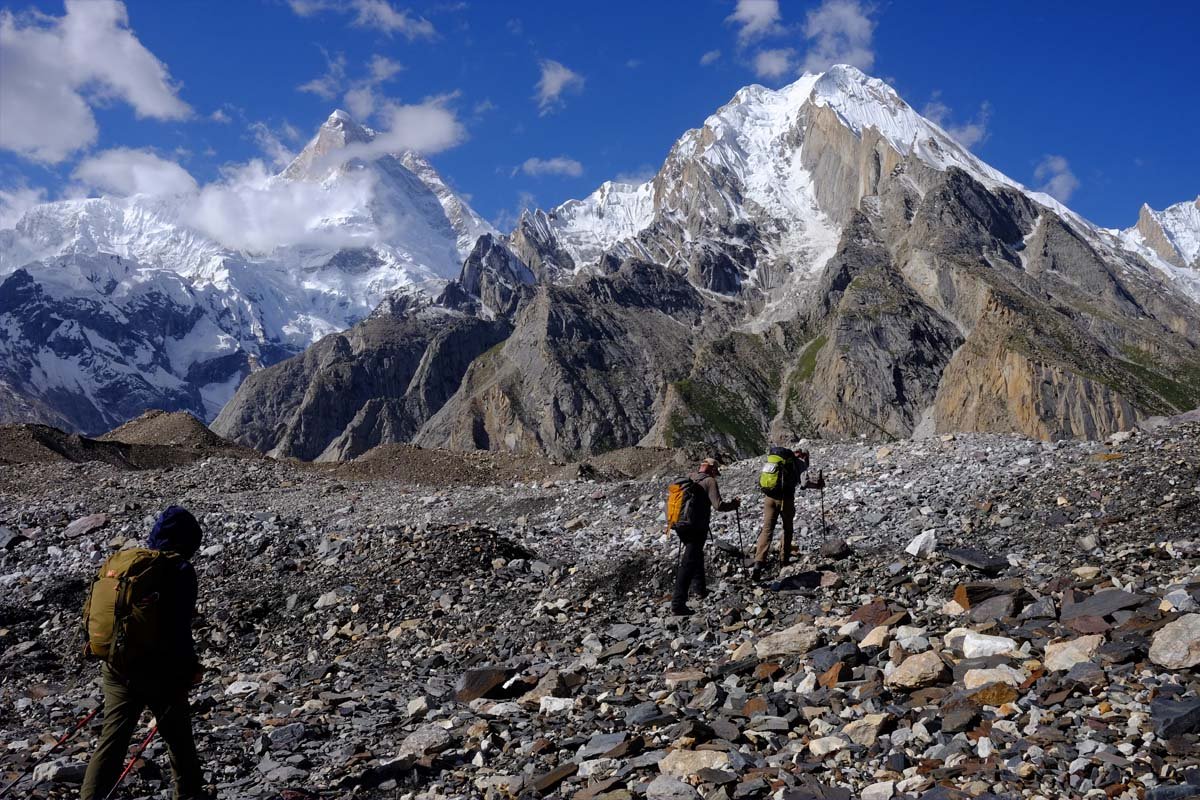
Trekkers on the trail from Askole up the Braldu valley.
Frequently asked questions
Where is Askole?
In the Braldu valley of the Shigar District, Gilgit-Baltistan, northern Pakistan, north-east of Skardu. It is the last village before the Baltoro Glacier and the high Karakoram.
What is the altitude of Askole?
About 3,000 m. Wikipedia gives 3,040 m, and terrain data for the village gives about 3,020–3,040 m.
How far is Askole from K2 Base Camp?
About 97 km on foot up the Baltoro Glacier, through Jhula, Paju, Khoburse, Urdukas, Goro 2 and Concordia: 8 days of walking including a rest day at Paju.
How far is Askole from Skardu?
About 126 km, 5 to 7 hours by jeep through Shigar and up the Braldu valley.
Is it Askole or Askoli?
Both are used: Askole, Askoli and Askoly are spellings of the same village.
Can you drive to Askole?
Yes, by jeep on a rough mountain road from Skardu. Beyond Askole there is no road; all treks continue on foot.
Where do trekkers stay in Askole?
Most groups camp at the campsites in and around the village. On our treks we camp, with our own tents, cook and kitchen team.
Which treks start in Askole?
The K2 Base Camp trek, K2 and the Gondogoro La, the Baltoro Glacier trek to the Gasherbrums, the Snow Lake and Hispar La trek up the Biafo Glacier, and expeditions to K2, Broad Peak, the Gasherbrums and other peaks.
What happens in Askole on a trek?
The group arrives by jeep, sets up camp, and the next morning porters are hired and loads are weighed and shared out before the walk to Jhula begins.
What is the best time to visit Askole?
June to September, the trekking season. The road can be closed by landslides in spring and summer and by snow in winter.
How many people live in Askole?
A small community; Wikipedia gives a population of 370 for 1996. Families farm barley and potatoes, keep animals and work as porters in summer.
Do I need a permit to go beyond Askole?
Yes. The Baltoro treks and expeditions need a trekking or climbing permit and the national park fee, which we arrange for our trips.
Is there mobile signal in Askole?
Very limited. Expect little or no signal from Askole onwards; our guides carry the means to call for help.
What is the Biafo Glacier?
The glacier that starts just above Askole and leads to Snow Lake and the Hispar La. It is part of one of the longest glacier systems outside the polar regions.
How much do porters carry?
Usually up to about 25 kg each, according to the official limits. Loads are weighed in Askole before the trek starts.
Can I visit Askole without trekking?
Yes, as a long day trip or an overnight from Skardu by jeep, but most visitors come to start a trek. The drive alone takes 5 to 7 hours each way.
What is the weather like in Askole in summer?
Warm, sunny days in the valley and cool nights, with occasional rain or dust storms. Higher up on the Baltoro, nights are below freezing.
Is Askole in a national park?
The treks beyond Askole enter the Central Karakoram National Park, and the park fee is checked at the start of the trail; we arrange it for our trips.
How long is the K2 Base Camp trek from Askole and back?
About 195 km on foot in total, usually 14 to 15 days of walking from Askole to K2 Base Camp and back, with rest and spare days.
What is the road to Askole like?
A narrow, rough jeep road along the Braldu valley, with loose sections and side-stream crossings. It is repaired regularly but can be closed for hours or days by landslides, so keep spare days in your plans.
Where is the snout of the Baltoro Glacier?
Just above Paju, the second camp after Askole, about two days' walk from the village. Beyond Paju the trail runs on the glacier and its moraine all the way to Concordia.
Can I combine a trek from Askole with Hunza?
Yes. The Snow Lake trek starts in Askole and ends in Nagar near Hunza, and from Skardu you can also drive to Hunza in 7 to 8 hours after a trek.
How hard is the walk from Askole to Jhula?
It is the first trekking day: a long, warm walk along the Braldu river, with some rough sections, but not steep. It is a good chance to find your rhythm.
About the author
Imtiyaz Ahmed Shigri founded Chogori Adventure in Skardu in 2015. Our guides are local, government-licensed and English-speaking, and most of them are trained in first aid. We are licensed by the Department of Tourist Services (licence no. 2494) and the Gilgit-Baltistan tourism department (licence DTS-GB-055), and we are a member of the Pakistan Association of Tour Operators, with offices in Skardu and Islamabad.
Rated 4.9 out of 5 from 47 reviews on Google (November 2026). Read our reviews on Google