Places to Visit in Skardu: 19 Top Sights and How to See Them
By Imtiyaz Ahmed Shigri, founder of Chogori Adventure, Skardu · Updated November 2026
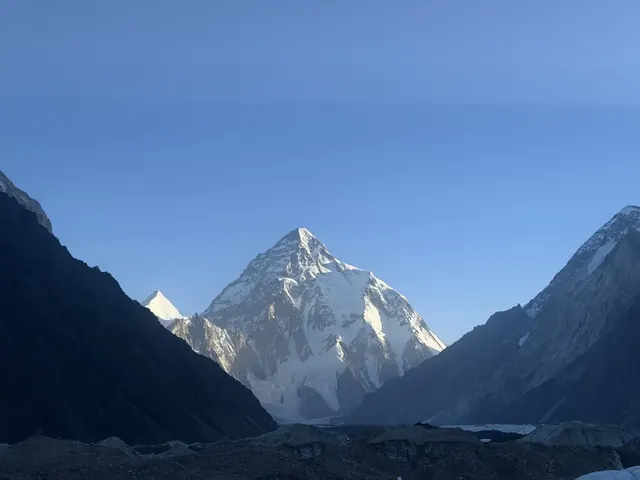
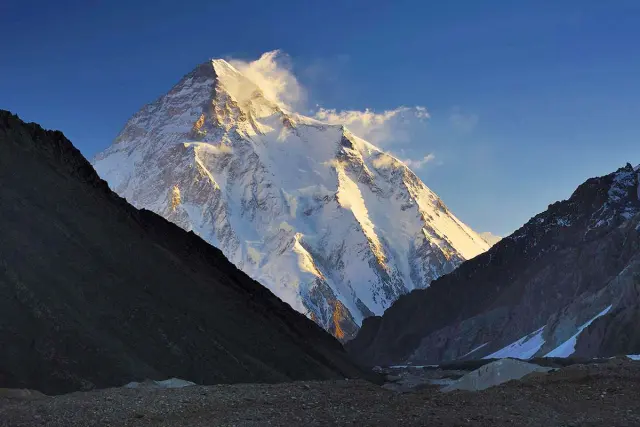
The best places to visit in Skardu are Shangrila and Upper Kachura Lake, Shigar Fort, the Katpana and Sarfaranga cold deserts, Satpara Lake, Kharpocho Fort and the Manthal Buddha Rock, all within an hour of town, plus Khaplu Palace, Manthokha Waterfall and, from July to September, the Deosai Plains. Skardu (about 2,230 m) is the main town of Baltistan in Gilgit-Baltistan, on the Indus River, and the starting point for K2 and the Karakoram. This guide covers 19 sights in and around Skardu, how far each one is, the weather month by month, how many days you need and how to plan your visit.

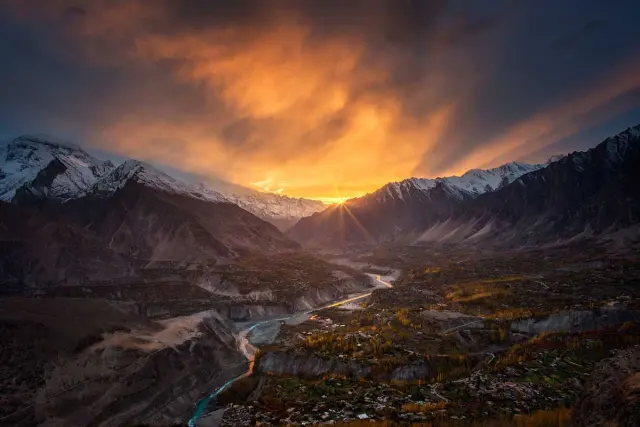
Skardu in winter, at about 2,230 m on the Indus River.
A short history of Skardu and Baltistan
Baltistan, the region around Skardu, was once known as "Little Tibet". Its people speak Balti, a language closely related to Tibetan, and before Islam the region was Buddhist: the Manthal Buddha Rock is one of the clearest traces of that time. In the 14th century Sufi preachers from Kashmir brought Islam to the valley, and the oldest mosques, such as Chaqchan in Khaplu and Amburiq in Shigar, date from that period.
For centuries Baltistan was divided into small kingdoms ruled from Skardu, Shigar, Khaplu and other valleys. The best-known ruler was Ali Sher Khan Anchan of Skardu in the late 16th century, to whom Kharpocho Fort is attributed. The palaces of Shigar and Khaplu, both now restored, are the finest remains of the old courts. Today Skardu is the main town of Baltistan and the base for expeditions to K2 and the other great peaks of the Karakoram.
Places to visit in Skardu at a glance
| Place | Area | From Skardu town | Best for |
|---|---|---|---|
| Kharpocho Fort | Skardu town | in town; short steep walk | History, view over Skardu |
| Skardu bazaar | Skardu town | in town | Shopping, local life |
| Manthal Buddha Rock | Skardu | about 4 km | Buddhist carving, about 8th century |
| Satpara Lake | Skardu | about 10 km | Lake, trout, gateway to Deosai |
| Katpana Cold Desert | Skardu | about 5 km | Sand dunes, sunset |
| Nansoq organic village | Skardu | about 1 hour on foot | Village life, orchards |
| Shangrila (Lower Kachura Lake) | Kachura | about 26 km | Lake resort, photos |
| Upper Kachura Lake | Kachura | about 30 km | Clear lake, boating, walks |
| Soq Valley | Kachura | about 25 km | Quiet side valley |
| Sarfaranga Cold Desert | Shigar road | about 11 km | Dunes, desert views |
| Shigar Fort (Fong Khar) | Shigar | about 30 km | Restored palace, museum |
| Amburiq Mosque | Shigar | about 30 km | One of the oldest mosques in Baltistan |
| Chunda Valley | near Skardu | about 1 hour by jeep | Blossom, meadows |
| Basho Valley | Indus, west of Skardu | 40–45 km, 2–3 hours by jeep | Forest, meadows, camping |
| Khaplu Palace | Khaplu | about 112 km, 2.5 hours | Palace, heritage hotel |
| Chaqchan Mosque | Khaplu | about 112 km | Mosque from 1370 |
| Manthokha Waterfall | Kharmang | about 80 km | Waterfall, picnic |
| Deosai National Park | Deosai | day trip by 4x4 | High plateau, wildlife (July–September) |
| Sheosar Lake | Deosai | day trip by 4x4 | Lake at about 4,140 m |
Places to visit in and around Skardu town
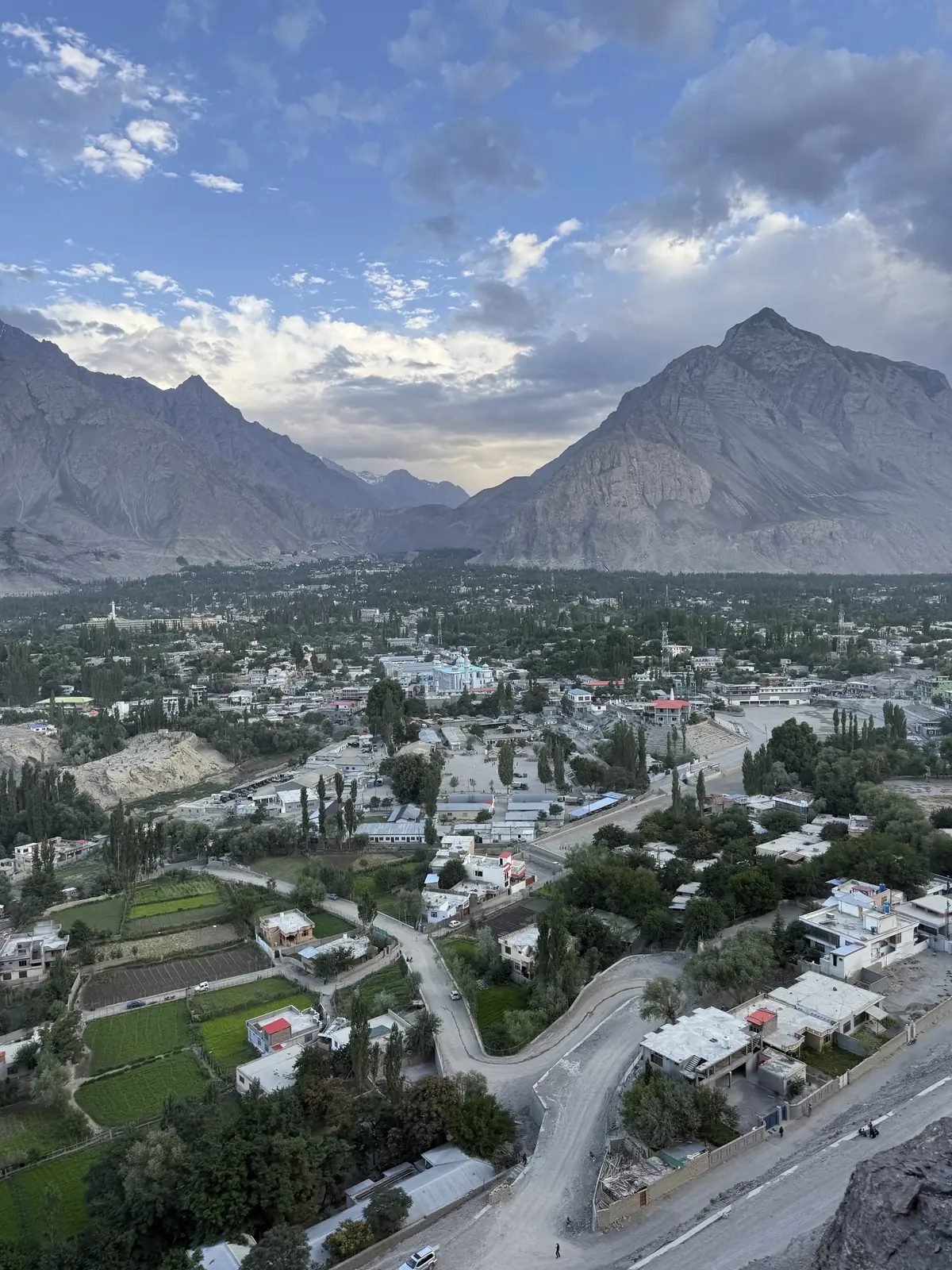
Skardu town and the valley from Kharpocho Fort
1. Kharpocho Fort
In Skardu town · a short, steep walk from the bazaar
Kharpocho, also called Skardu Fort, stands on the great rock above the town and the Indus. Its name means "king of forts" in Balti. It is attributed to Ali Sher Khan Anchan, the best-known ruler of Baltistan, in the late 16th century, and served as a stronghold and lookout over the valley.
The walk up is short but steep. From the top you see the whole Skardu valley: the town, the Indus, the Katpana desert and the mountains around. Go in the late afternoon for the softest light.
2. Skardu bazaar
In Skardu town
The main bazaar is where Baltistan shops. Look for dried apricots, apricot oil, walnuts, woollen caps and shawls, and the gemstone shops for which Skardu is known. It is also the place for a cup of tea and a plate of local food after a day out.
3. Manthal Buddha Rock
About 4 km from town, off the Satpara road
In the village of Manthal, a large granite rock carries a relief of the Buddha surrounded by smaller figures. It probably dates from the 8th century, when Baltistan was Buddhist, and it is one of the most important Buddhist relics in the region. It lies about 3 km off the road to Satpara Lake, so it is easy to combine the two.

The Manthal Buddha Rock, probably carved in the 8th century.
4. Satpara Lake
About 10 km south of town · about 2,600 m
Satpara (or Sadpara) Lake is a natural lake of about 4 km² in a valley above Skardu, fed by glacier meltwater; its stream supplies water to the town. Brown and rainbow trout were introduced here. The road continues past the lake and climbs to the Deosai Plains, so many visitors stop on the way to Deosai.
5. Katpana Cold Desert
About 5 km from town, near the airport · about 2,226 m
The Katpana Desert, also called the Skardu Cold Desert, is a field of sand dunes beside the Indus, close to Skardu airport. At about 2,226 m it is one of the highest deserts in the world, and in winter the dunes are often covered in snow. Come at sunset, when the dunes turn gold against the mountains; Katpana Lake lies at its edge.
6. Nansoq organic village
About an hour on foot from town
Nansoq is a small village behind the Kharpocho rock, known for its traditional, organic farming: apricot and apple orchards, small fields and stone houses. A walk here shows how families in Baltistan live and farm.
Kachura: Shangrila, Upper Kachura and Soq Valley
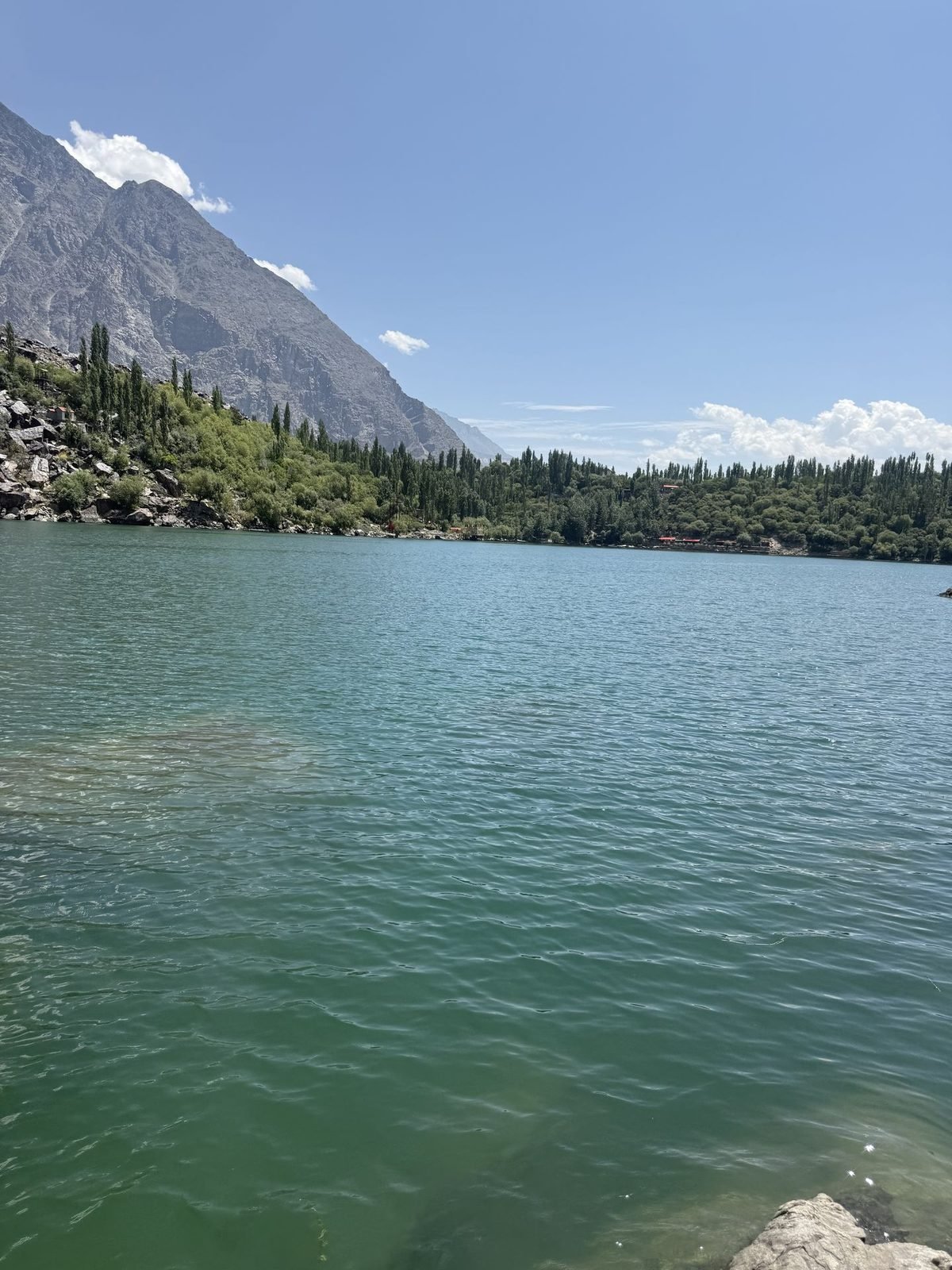
The turquoise water of Upper Kachura Lake near Skardu
7. Shangrila Resort and Lower Kachura Lake
About 26 km from town, 30–40 minutes · about 2,250 m
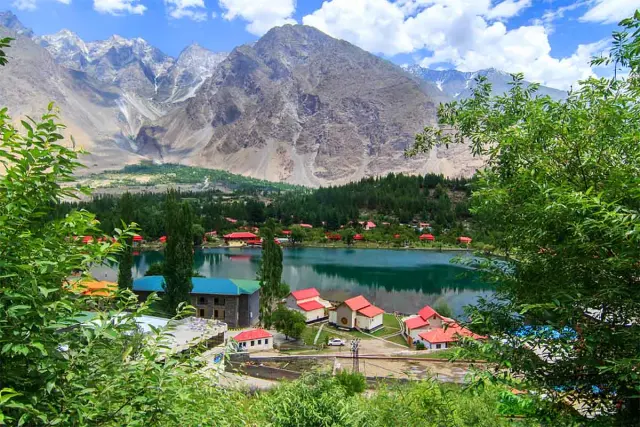
Lower Kachura Lake, better known as Shangrila Lake, is the most photographed place in Skardu. A resort has stood on its shore since 1983, with pagoda-style roofs and gardens around the water, and a restaurant built inside an old aircraft. Entry to the resort grounds is by ticket.
It is busy in summer, especially at weekends, so come early in the morning for calm water and reflections.

Shangrila Resort on Lower Kachura Lake.
8. Upper Kachura Lake
About 30 km from town, near Shangrila · about 2,250 m
Upper Kachura Lake (Foroq Tso) lies just above Shangrila, reached by a short walk down from the road. It is deeper, clearer and quieter than the lower lake, with orchards around it and mountains behind. Boats are available for a short ride, and a path runs along part of the shore.
In autumn the poplars and orchards turn gold, and this is one of the finest places in Skardu for photos.

A boat on Kachura Lake in autumn.
9. Soq Valley
About 25 km from town, near Kachura
Soq is a small green side valley a few kilometres from Shangrila and Upper Kachura. It sees fewer visitors than the lakes and is good for a short walk among fields, streams and village houses.
Shigar valley
The Shigar valley opens north of Skardu and stretches about 170 km to Askoli, the last village before the Baltoro Glacier and K2. Its lower part, around the town of Shigar, is green and fertile, and it is an easy half-day or day trip from Skardu.
10. Sarfaranga Cold Desert
About 11 km from town, at the mouth of the Shigar valley · about 2,300 m
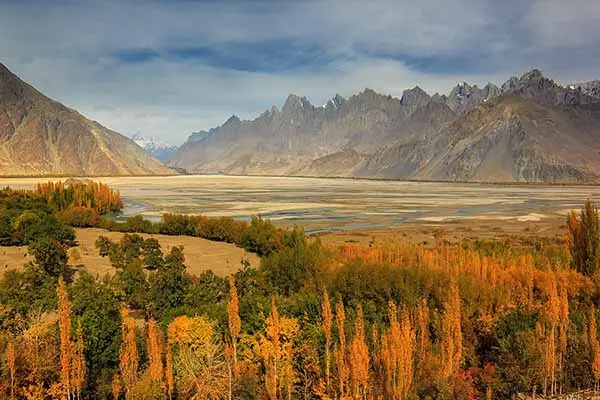
Sarfaranga is a second cold desert, larger and wilder than Katpana, where the Shigar River meets the Indus. Its dunes lie below snow peaks, and it is the setting for the annual cold-desert jeep rally. You cross it on the way to Shigar.

The Sarfaranga cold desert at the mouth of the Shigar valley.
11. Shigar Fort (Fong Khar)
About 30 km from Skardu, in Shigar town
Shigar Fort, known locally as Fong Khar, "the palace on the rock", was the residence of the rulers of Shigar. It was restored by the Aga Khan Trust for Culture and is now a heritage hotel with a small museum of local woodwork and objects. Visitors can tour the fort and its garden.
12. Amburiq Mosque
In Shigar
A short walk from the fort, the small wooden Amburiq Mosque is one of the oldest mosques in Baltistan and is attributed to the 14th-century Sufi scholar Sayed Ali Hamdani. Its carved wood and simple form show the style of early mosques in the region.
13. Chunda Valley
About an hour from Skardu by jeep
Chunda is a small valley of fields, orchards and streams, best known for its blossom in spring and its green meadows in summer. The road is rough in places, so go by jeep. It is a good half-day trip for families and photographers.
Further afield: Basho, Khaplu, Kharmang and Deosai
14. Basho Valley
40–45 km west of Skardu, 2–3 hours by jeep
Basho is a side valley off the Indus west of Skardu, with pine forest, meadows and a clear stream. The last part of the road is a rough jeep track, which keeps it quiet. Many visitors camp here for a night in summer; it is one of the few forested valleys near Skardu.
15. Khaplu Palace
About 112 km east of Skardu, about 2.5 hours
Khaplu lies on the Shyok River in the valley that leads to Hushe and the Masherbrum peaks. Khaplu Palace, locally called Yabgo Khar, was built in the mid-19th century as the residence of the Raja of Khaplu. From 2005 to 2011 it was restored by the Aga Khan Trust for Culture, and it is now a heritage hotel. Its wooden balconies and carved windows are the finest example of Balti palace architecture.
16. Chaqchan Mosque
In Khaplu
Close to the palace stands the Chaqchan Mosque, dating from 1370, one of the oldest mosques in the region. It was built when the people of Baltistan converted from Tibetan Buddhism to Islam, and its architecture mixes Tibetan, Kashmiri, Mughal and Persian styles.
17. Manthokha Waterfall
About 80 km from Skardu, in the Kharmang valley
Manthokha (or Manthoka) Waterfall drops about 55 m into a green valley in Kharmang, south-east of Skardu. Small restaurants and shaded spots by the stream make it a popular picnic stop on hot summer days.
18. Deosai National Park
Above Satpara, day trip by 4x4 · July to September
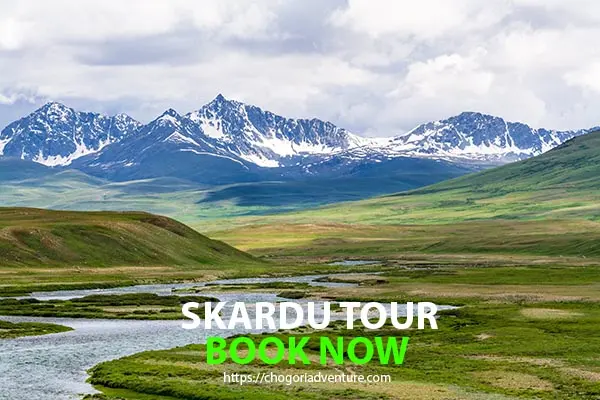
The Deosai Plains form one of the highest plateaus in the world, at an average of about 4,114 m, protected as Deosai National Park. In July and August the plateau is covered in wildflowers. It is home to marmots and the Himalayan brown bear. The road from Skardu climbs past Satpara Lake onto the plateau; from about October to June it is closed by snow.

The Deosai Plains, open from about July to September.
19. Sheosar Lake
On the western edge of Deosai · about 4,140 m
Sheosar Lake lies at the far side of the plateau, a long but popular day trip from Skardu by 4x4. On calm days the lake reflects the surrounding peaks. Bring warm clothes: even in August it can be cold and windy at this height.
Things to do in Skardu beyond sightseeing
- Boating on Upper Kachura and Satpara lakes.
- Camping for a night in Basho Valley or, in summer, on the Deosai Plains.
- Jeep safaris to Deosai, Basho and Chunda, where the roads are rough and the views wide.
- Short walks through the villages of Shigar, Soq and Nansoq, among orchards and water channels.
- Wildlife watching on Deosai: marmots everywhere, and with luck a Himalayan brown bear from a distance.
- Treks and climbs: Skardu is the starting point for the K2 Base Camp trek, the Gondogoro La and many trekking peaks.
Whatever you choose, plan your outdoor days for the morning: afternoons in summer can bring wind on the lakes and dust in the deserts.
Skardu weather by month
Skardu has a dry mountain climate: hot, sunny summer days, cool nights, and cold winters with little snow in town but plenty on the mountains. The table gives the official average high and low temperatures for the Skardu weather station (Pakistan Meteorological Department).
| Month | Average high | Average low | What to expect |
|---|---|---|---|
| Jan | 3 °C | -8 °C | Coldest month; snow on the deserts |
| Feb | 6 °C | -4 °C | Cold; frozen lakes |
| Mar | 12 °C | 2 °C | Cool; first blossom at the end of the month |
| Apr | 19 °C | 7 °C | Apricot and cherry blossom |
| May | 23 °C | 10 °C | Mild and green |
| Jun | 29 °C | 13 °C | Warm; start of the trekking season |
| Jul | 32 °C | 16 °C | Warmest; Deosai open |
| Aug | 31 °C | 16 °C | Warm; Deosai open; wildflowers |
| Sep | 27 °C | 11 °C | Clear and pleasant; last month for Deosai |
| Oct | 20 °C | 4 °C | Autumn colours, cool nights |
| Nov | 13 °C | -2 °C | Cold; quiet season begins |
| Dec | 6 °C | -6 °C | Cold, short days |
Best time to visit Skardu
- April: apricot and cherry blossom in Skardu, Shigar and Khaplu; cool nights.
- May and June: green fields, warm days; good for the lakes, Shigar and Khaplu.
- July to September: the only months for Deosai and Sheosar Lake, and the main season for treks to K2. The warmest and busiest time.
- October: clear skies and golden autumn colours around Kachura and Shigar; cold nights.
- November to March: cold and quiet. The deserts are often snow-covered and the lakes may freeze. Deosai is closed, and flights are more often cancelled.
How to get to Skardu
By air: flights from Islamabad to Skardu take about one hour and pass close to Nanga Parbat. They depend on clear weather and are often delayed or cancelled, so keep a spare day. By road: Skardu is about 644 km from Islamabad, usually two days on the Karakoram Highway and the rebuilt Skardu Road, with a night in Chilas. From Hunza it is about 295 km, see our Skardu to Hunza guide.
How many days do you need in Skardu?
- 3 days: Kharpocho Fort, the bazaar and Katpana on day 1; Shangrila and Upper Kachura on day 2; Sarfaranga and Shigar Fort on day 3.
- 5 days: add Khaplu Palace and the Chaqchan Mosque, and Manthokha Waterfall or, in summer, Deosai.
- 7 days or more: add a night in Basho Valley, a walk in Chunda or Soq, or continue to Hunza or Fairy Meadows.
Our Skardu tour packages cover these sights as private tours from April to October. If you are flying in, see our Skardu by air from Islamabad tour. To combine Skardu with Hunza, see the Skardu Hunza Tour, and with Fairy Meadows, the Fairy Meadows and Skardu Tour. For couples, see our Skardu honeymoon tour.
A sample 3-day itinerary
Day 1: Skardu town
Morning walk up to Kharpocho Fort for the view. Visit the Manthal Buddha Rock and continue to Satpara Lake. Late afternoon on the Katpana dunes for sunset, then dinner in town.
Day 2: Kachura lakes
Early start to Shangrila for calm water and reflections. Walk down to Upper Kachura Lake for a boat ride and lunch by the water. In the afternoon, a short walk in Soq Valley before returning to Skardu.
Day 3: Shigar
Cross the Indus and drive through the Sarfaranga desert to Shigar. Tour Shigar Fort and its museum, visit the Amburiq Mosque, and have lunch in the fort garden. Return to Skardu in the late afternoon, or continue to Khaplu the next day.
Where to stay in Skardu
Most visitors stay in Skardu town, which has hotels and guesthouses for every budget and is central for day trips. For a quieter stay, there are hotels near the Kachura lakes, including the resort at Shangrila. Two restored palaces are now heritage hotels: Shigar Fort in Shigar and Khaplu Palace in Khaplu; staying a night in either is a special experience. In July and August and during holidays, book ahead. On our tours we use comfortable hotels in Skardu with views over the valley.
Getting around Skardu
Skardu town is small enough to explore on foot, and taxis and rickshaws are easy to find. For Kachura, Shigar and Khaplu, a car with a local driver is the most practical choice; the roads are paved. For Deosai, Basho and Chunda you need a 4x4 jeep with a driver who knows the tracks. Shared vans run on the main roads but are slow and do not stop at the sights.
Skardu in winter
From December to February Skardu is very cold, with average lows of about −8 °C in January, but often sunny. The town itself gets little snow, while the mountains, the Katpana and Sarfaranga deserts and the lakes around Kachura can be white. Winter visits have become popular with visitors from within Pakistan who come for the snow. Deosai is closed, some hotels shut for the season, and flights are more often cancelled, so plan extra days and bring proper winter clothing.
Skardu with children and families
Skardu is easy with children if you keep the days short. The best family stops are Shangrila and Upper Kachura Lake (boats and gardens), the Katpana dunes, Satpara Lake and the gardens of Shigar Fort. Deosai is wonderful in summer but long, cold and bumpy, so it suits older children better. Keep snacks, water, sun hats and warm layers in the car, and allow time for rest, since Skardu lies at about 2,230 m.
Skardu or Hunza?
Both are worth visiting, and they are very different (our Gilgit-Baltistan travel guide shows how they fit with the rest of the region). Skardu has wide valleys, big rivers, cold deserts, lakes and the gateway to K2 and Deosai. Hunza has terraced villages, orchards, old forts and the view of Rakaposhi. If you have a week or more, see both: the two are about 295 km apart by road, and our Skardu Hunza Tour links them in 8 days. Our Skardu to Hunza guide compares them in detail.
Food to try in Skardu
- Apricots in every form: fresh in July, dried for the winter, and apricot-kernel oil.
- Balti noodle soups, warming after a cold day out.
- Trout from the lakes, served in some restaurants near Satpara and Kachura.
- Butter tea (salted tea), a Balti tradition, and local bread from the bazaar bakeries.
Tips for visiting Skardu
- Keep a spare day for flights to and from Skardu.
- Hire a car or jeep with a local driver for Deosai, Basho and Chunda; the roads are rough.
- Dress modestly: long sleeves and long trousers or skirts; women may want a scarf for mosques.
- Ask before you photograph people, especially women.
- Carry cash in Pakistani rupees for entry tickets, boats and small shops.
- Bring sun cream and a warm layer: the sun is strong at 2,230 m and evenings are cool.
- Planning a trek? Skardu is the starting point for our K2 Base Camp Trek and many climbs, see our top 5 trekking peaks.
Best photo spots in Skardu
- Kharpocho Fort in the late afternoon, for the whole valley with the Indus below.
- Shangrila and Upper Kachura early in the morning, before the wind ruffles the water.
- The Katpana dunes at sunset, when the sand turns gold and the mountains turn pink.
- Sarfaranga with snow peaks behind the dunes, best in clear autumn light.
- Shigar Fort and its wooden balconies, from the garden in the morning.
- Sheosar Lake on a calm day, for reflections of the peaks around Deosai.
Ask before photographing people, and ask before flying a drone near homes, forts or mosques. Some heritage sites have their own rules about photography inside, so check at the entrance.
Travelling responsibly in Baltistan
Skardu's lakes, deserts and meadows are fragile, and more visitors come every year. Take your rubbish back to town, stay on paths in Deosai and do not disturb the marmots or bears, avoid single-use plastic where you can, and buy local products such as dried fruit and handicrafts directly from the people who make them. On our trips we employ local guides and drivers from Baltistan and bring back all our waste.
Frequently asked questions
What are the best places to visit in Skardu?
The most popular are Shangrila and Upper Kachura Lake, Shigar Fort, the Katpana and Sarfaranga cold deserts, Satpara Lake, Kharpocho Fort, the Manthal Buddha Rock, Khaplu Palace, Manthokha Waterfall and, in summer, the Deosai Plains with Sheosar Lake.
How many days do you need in Skardu?
Three days for the sights around town, Kachura and Shigar; five days to add Khaplu, Manthokha and Deosai; a week or more for a side valley such as Basho or a trek.
What is the best time to visit Skardu?
April to October. April brings blossom, July and August are warm and the only months for Deosai, and October has clear skies and autumn colours. Winter is very cold but popular for snow.
What is the weather like in Skardu?
Dry, with hot sunny summer days (average highs about 31–32 °C in July and August) and cold winters (average lows about −8 °C in January). It rains or snows only a little.
Is Skardu worth visiting?
Yes. Within a short drive of town you find lakes, cold deserts, old forts and Buddhist carvings, and Skardu is the starting point for K2, Deosai and many treks.
How do I get to Skardu?
By air from Islamabad (about 1 hour, weather permitting) or by road on the Karakoram Highway and the Skardu Road, about 644 km and usually two days.
What is Skardu famous for?
Its lakes (Kachura, Satpara, Sheosar), cold deserts, the forts of Shigar and Khaplu, the Deosai Plains, apricots, and as the gateway to K2 and the Baltoro Glacier.
How far is Shangrila from Skardu?
Shangrila Resort and Lower Kachura Lake are about 26 km from Skardu town, about 30 to 40 minutes by road.
How far is Shigar Fort from Skardu?
About 30 km, around 45 minutes by road across the Indus and past the Sarfaranga desert.
How far is Khaplu from Skardu?
About 112 km east along the Shyok River, around 2.5 hours by road.
Can you visit Deosai from Skardu in a day?
Yes, from about July to September. Sheosar Lake on the far side of the plateau is a long but popular day trip by 4x4.
Is there a desert in Skardu?
Yes, two: the Katpana Desert next to the airport (about 2,226 m) and the Sarfaranga Desert at the mouth of the Shigar valley (about 2,300 m). Both are cold deserts, often snow-covered in winter.
Where should I stay in Skardu?
Skardu town is the most practical base for day trips. For something special, stay at a resort near the Kachura lakes or in one of the restored palaces at Shigar or Khaplu, which are now heritage hotels.
Is Skardu good for families?
Yes. Shangrila and Upper Kachura Lake, the Katpana dunes, Satpara Lake and Shigar Fort are all short, easy trips. Keep days short, bring warm layers and allow time to adjust to the height of about 2,230 m.
Is Skardu cold in summer?
Not in the town: average highs are about 31–32 °C in July and August. Evenings are cooler, and places higher up, such as Deosai and Sheosar Lake at over 4,000 m, can be cold even in summer.
How high is Skardu?
Skardu town lies at about 2,230 m. The Kachura lakes are at about 2,250 m, Satpara Lake at about 2,600 m, and the Deosai Plains at an average of about 4,114 m, with Sheosar Lake at about 4,140 m.
What should I buy in Skardu?
Dried apricots and apricot oil, walnuts, woollen caps and shawls, and gemstones from the shops of Skardu bazaar.
Do I need a permit to visit Skardu?
No trekking permit is needed for Skardu and the places in this guide. Deosai is a national park, and visitors need a permit from the Gilgit-Baltistan Wildlife Department. You need the tourist e-visa, which you apply for online at visa.nadra.gov.pk. Deosai has a national park entry fee.
About the author
Imtiyaz Ahmed Shigri founded Chogori Adventure in Skardu in 2015. Our guides are local, government-licensed and English-speaking, and most of them are trained in first aid. We are licensed by the Department of Tourist Services (licence no. 2494) and the Gilgit-Baltistan tourism department (licence DTS-GB-055), and we are a member of the Pakistan Association of Tour Operators, with offices in Skardu and Islamabad.
Rated 4.9 out of 5 from 47 reviews on Google (November 2026). Read our reviews on Google