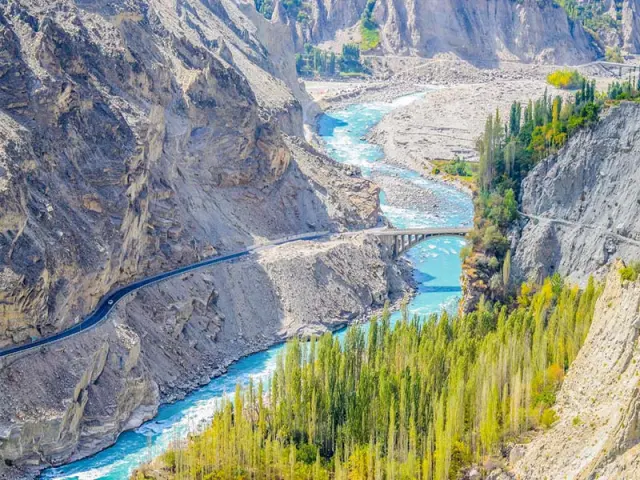
Hushe Valley, Pakistan: Treks, Peaks and How to Get There
By Imtiyaz Ahmed Shigri, founder of Chogori Adventure, Skardu · Updated November 2026
Hushe Valley is a mountain valley in the Ghanche District of Gilgit-Baltistan, in the Karakoram of northern Pakistan. It runs north from the Shyok River near Khaplu to Masherbrum (7,821 m), and its last village, Hushe (about 3,150 m), is about 130 km or 5 hours by road from Skardu. Hushe is the starting point for treks to Laila Peak Base Camp, the Gondogoro valley, Masherbrum Base Camp and the granite towers of Charakusa, and the end point of the famous Gondogoro La trek from K2. This guide explains how to get there, the peaks and treks, where to stay, the best time to go and what to expect.
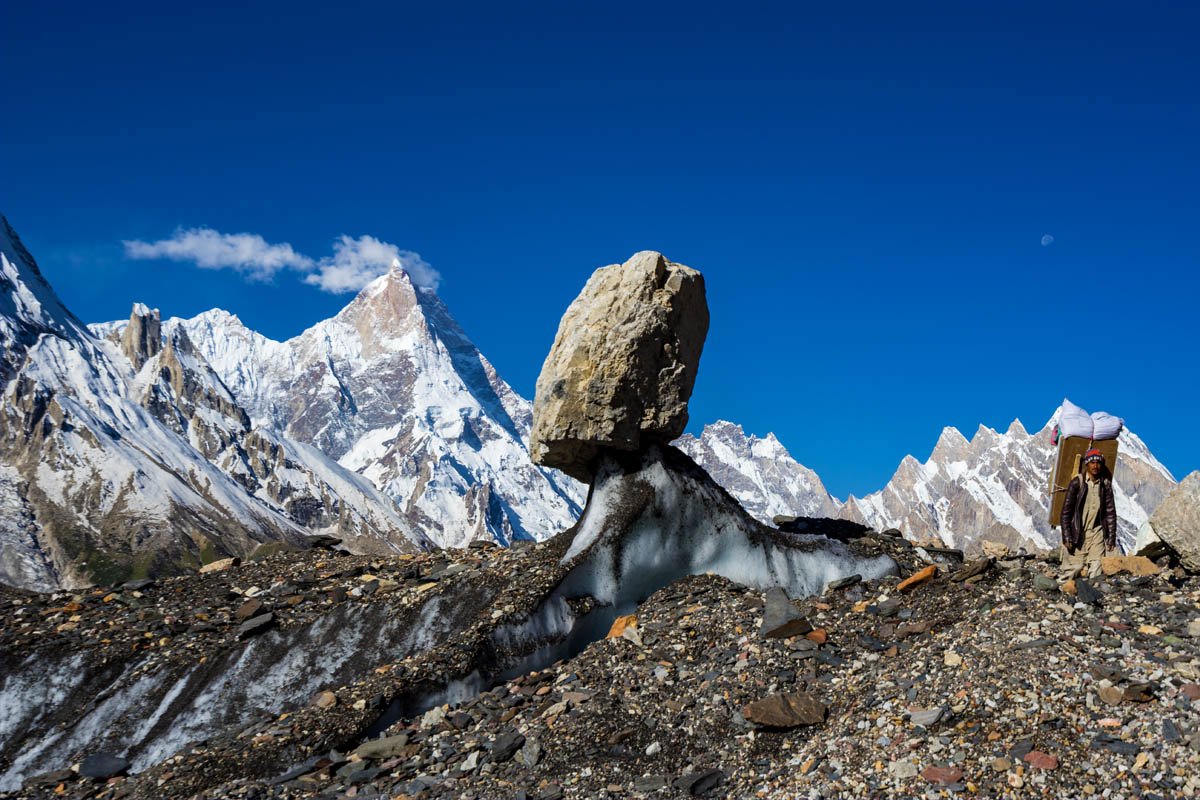
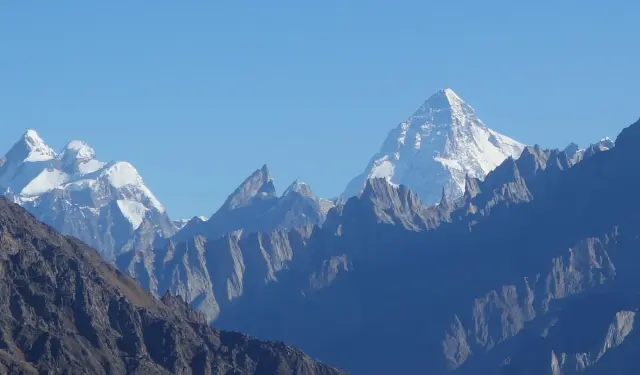
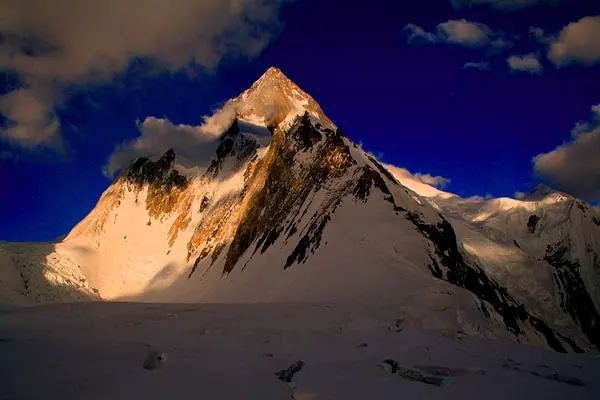
Masherbrum (7,821 m), the mountain at the head of the Hushe valley.
Hushe Valley at a glance
| Fact | |
|---|---|
| Where | Ghanche District, Gilgit-Baltistan, northern Pakistan |
| River | Hushe River, flowing south into the Shyok opposite Khaplu |
| Last village | Hushe, about 3,150 m |
| From Skardu | about 130 km, about 5 hours by jeep |
| Nearest airport | Skardu (no airport in Hushe) |
| Highest peak | Masherbrum, 7,821 m (K1) |
| Famous for | Laila Peak, K6, Masherbrum, Charakusa granite, the Gondogoro La |
| Best months | June to September |
| People | Balti; Balti language, related to Tibetan |
Why choose Hushe?
Most trekkers in Baltistan head for the Baltoro Glacier and K2. Hushe offers something different: high peaks and glaciers within two or three days' walk of the road, quieter trails, and a living Balti village at the start of every trek. It suits trekkers with less time, those who want to see big mountains without a three-week expedition, and climbers looking for granite and snow peaks away from the crowds. And for those who do go to K2, crossing the Gondogoro La into Hushe turns the trek into a full traverse of the Karakoram.
Money, food and supplies
There are no banks or ATMs in Hushe, so bring enough Pakistani rupees from Skardu. Small shops in the village sell basic food, drinks and snacks, but trekking food, fuel and equipment are best bought in Skardu. Guesthouse meals are simple and filling: dal, rice, vegetables, chapati and tea. On our treks all meals are prepared by our own cook.
Where is Hushe Valley?
Hushe lies in the far east of Baltistan, in the Ghanche District, whose capital is Khaplu. The Hushe River rises in the glaciers below Masherbrum and the peaks around the Gondogoro Glacier and flows south through a narrow valley of villages and fields to the Shyok River, opposite Khaplu. Hushe village sits near the head of the valley, where the road ends and the trails begin.
Above Hushe the valley divides into several branches, each leading to a glacier and a group of peaks: the Gondogoro valley to the north-east, towards Laila Peak and the Gondogoro La; the Masherbrum valley to the north, below the south face of Masherbrum; the Charakusa valley to the east, below K6 and K7; and the Aling valley to the west. Lower down, side valleys such as Nangma (from Kanday) and the trail to the Machulo La (from Machulo) branch off the main valley.
How to get to Hushe
Fly to Skardu
There are no flights to Hushe: the valley has no airport. The nearest is Skardu, with flights from Islamabad of about one hour. Flights depend on clear weather and are often delayed, so allow a spare day. If flights do not operate, the road from Islamabad to Skardu takes about two days on the Karakoram Highway and the Skardu Road.
Skardu to Hushe by road
From Skardu the road follows the Indus east, then the Shyok, to the Khaplu area (about 103 km). It crosses the Shyok River and turns north up the Hushe valley, past villages such as Kanday and Machulo, to Hushe. In total it is about 130 km and roughly 5 hours by jeep. The last part is a narrower mountain road, so a jeep or a 4x4 with a local driver is the practical choice.
Khaplu: on the way to Hushe
Khaplu, the capital of Ghanche, was once the second-largest kingdom of Baltistan, under the Yabgo dynasty. It is worth a stop on the way in or out. Khaplu Palace (Yabgo Khar), built in the mid-19th century and restored by the Aga Khan Trust for Culture, is now a heritage hotel; the Chaqchan Mosque, dating from 1370, is one of the oldest in the region. Our guide to the places to visit in Skardu covers both.
Hushe village and its people
Hushe is a Balti village of stone and wooden houses, small fields of barley and potatoes, and summer pastures above. The people speak Balti, a language related to Tibetan. Life here follows the seasons: farming in summer, herding animals up to the high pastures, and long, cold winters.
For decades Hushe has also been a village of mountain workers. Many men work as porters, cooks and climbing guides on treks and expeditions in the Karakoram, and the experience of Hushe porters on the Gondogoro La and the Baltoro is well known. On our trips we employ local staff from the Hushe valley, so the money from trekking stays in the community.
Masherbrum: the story of K1
When the surveyors of the Great Trigonometrical Survey of India mapped the Karakoram in the 1850s, Masherbrum was the first peak they measured, so it was named K1; K2, further north, was the second. At 7,821 m it is the 22nd-highest mountain on Earth and the highest peak of the Hushe area. Its steep faces made it a long-standing challenge: the first ascent was made in 1960 by an American–Pakistani expedition. Today it is still rarely climbed, but its south face, seen from the Masherbrum valley above Hushe, is one of the great sights of Baltistan.
Hushe for non-trekkers
You do not need to be a trekker to enjoy Hushe. A day trip or an overnight stay from Khaplu lets you see the village, its fields and the view of Masherbrum. From Hushe, an easy walk of a few hours along the river towards Saicho gives a taste of the valley without any steep climbs, and families with older children can manage it at their own pace. Bring warm layers: even in summer, mornings and evenings at 3,150 m are cool.
Road conditions
The road from Skardu to Khaplu is paved and in good condition. Beyond the Shyok bridge, the road up the Hushe valley is narrower, with gravel sections, steep drops and some landslide-prone stretches, especially after rain or during snowmelt in spring. A jeep or 4x4 with an experienced local driver is the best choice, and it is wise to travel in daylight and allow extra time.
Peaks around Hushe Valley
| Peak | Height | Where | Note |
|---|---|---|---|
| Masherbrum (K1) | 7,821 m | Head of the Masherbrum valley | 22nd-highest mountain on Earth; the first peak mapped in the Karakoram survey, hence "K1" |
| K6 (Baltistan Peak) | 7,282 m | Charakusa valley | Huge, steep faces; a serious technical climb |
| K7 | about 6,900 m | Charakusa valley | Steep granite and ice; for expert climbers |
| Laila Peak | 6,096 m | Gondogoro valley | Spear-shaped; north-west face of about 45°, 1,500 m high |
| Gondogoro Peak | 5,650 m | Above Khuspang | A trekking peak, climbed after the Gondogoro La |
| Amin Brakk | 5,850 m | Nangma valley | A granite big wall, the "Great Tower" of Nangma |
Most of these are serious mountaineering objectives, but you do not need to climb to enjoy them: the treks from Hushe lead to base camps and viewpoints right below their faces. For a first summit in the area, see our guide to the top 5 trekking peaks in Pakistan, which includes Gondogoro Peak.

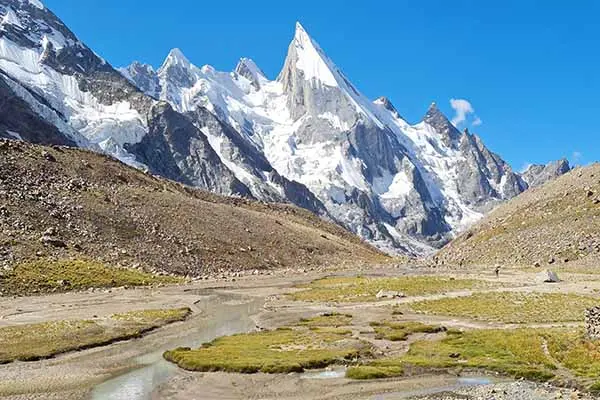
Laila Peak (6,096 m) seen from Khuspang camp in the Gondogoro valley.
Treks and climbs from Hushe
| Trip | Days from Islamabad | Highest point | Price | Difficulty |
|---|---|---|---|---|
| Laila Peak Base Camp Trek | 13 | Khuspang, 4,680 m | $1,600 | Moderate; one day on the glacier |
| Nangma Valley Trek | 10 | Amin Brakk Base Camp, about 4,500 m | $1,400 | Moderate; no permit needed |
| Machulo La K2 Viewpoint Trek | 11 | Machulo La viewpoint, about 4,700 m | $1,600 | Moderate to strenuous |
| K2 and Gondogoro La Trek | 21 | Gondogoro La, 5,585 m | $2,300 | Challenging; fixed ropes on the pass |
| Gondogoro Peak Climbing Expedition | 23 | Gondogoro Peak, 5,650 m | from $4,000 | Strenuous; roped snow climb |
| Laila Peak Expedition | 22 | Laila Peak, 6,096 m | $2,400 (base camp services) | Technical |
| Masherbrum Base Camp, Charakusa (K6 and K7), Aling | on request | base camps | on request | Moderate to strenuous; trip pages coming soon |
Laila Peak Base Camp and Khuspang
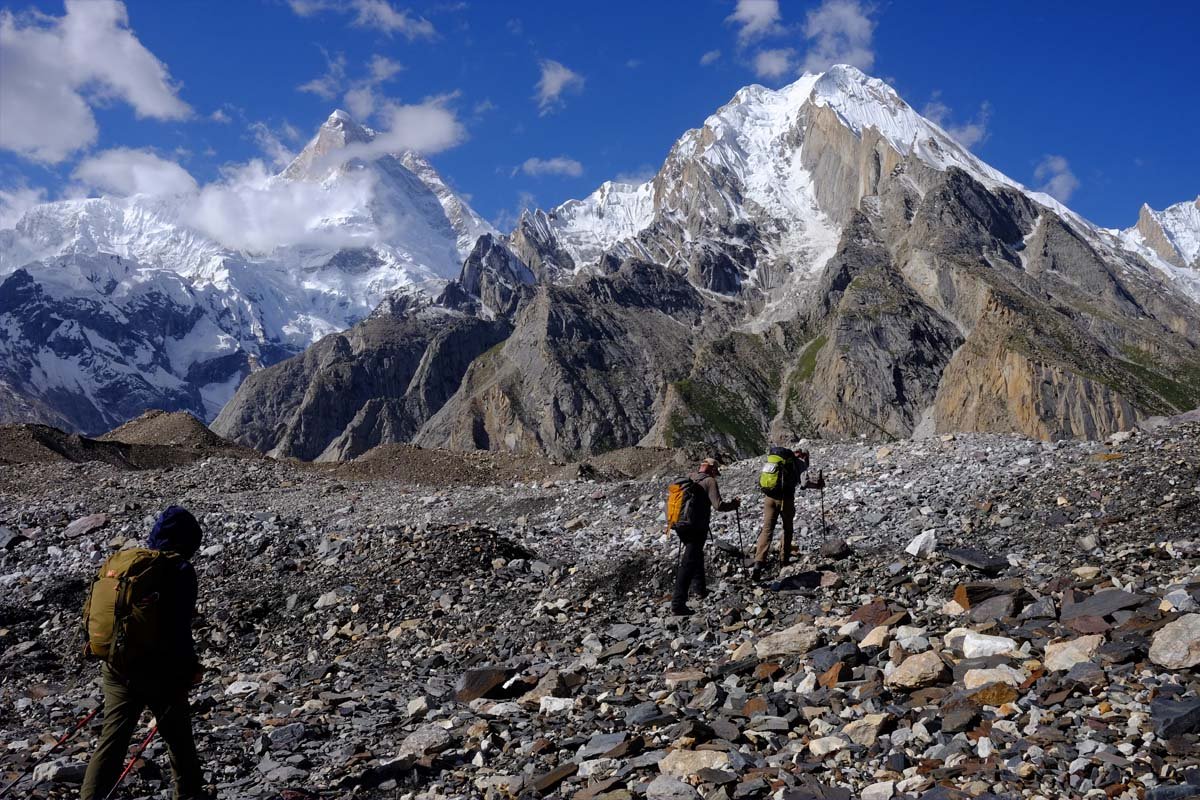
The most popular trek from Hushe follows the Gondogoro valley: from Hushe to Saicho (about 3,350 m), past the Gondogoro summer huts (about 3,700 m) to Dalchangpa, the base camp of Laila Peak (about 4,200 m), and on to Khuspang (4,680 m) on the edge of the Gondogoro Glacier. From Khuspang you face Laila Peak and the high peaks around the glacier. It is a moderate trek with no pass, and a good introduction to the Karakoram: our Laila Peak Base Camp Trek takes 13 days from Islamabad.
Masherbrum Base Camp
North of Hushe, a trail follows the Masherbrum valley and its glacier towards the base camp below the south face of Masherbrum (7,821 m). The walk passes summer pastures and moraines, with the wall of Masherbrum growing ahead. We run this trek on request; the trip page will be added soon.
Charakusa valley: K6 and K7 base camp
East of Hushe, the Charakusa valley is a world of granite spires below K6 (7,282 m) and K7, known to climbers for its big walls and to trekkers for its dramatic scenery. The trek to the base camp area crosses moraines and meadows. We run Charakusa treks on request; this page will also be added soon.

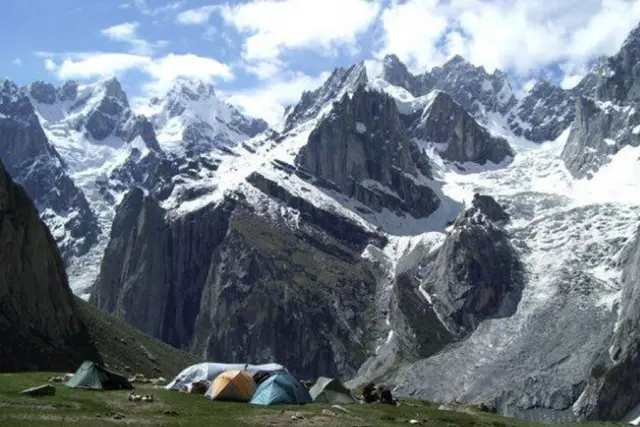
K6 and K7 above the Charakusa valley.
Aling valley
West of Hushe, the Aling valley is the quietest branch, with pastures and glacier views and very few visitors. It suits trekkers who want to walk away from the main routes. Treks to Aling are available on request.
Nangma valley
Lower down the Hushe valley, the village of Kanday is the start of the trek into the Nangma valley, often called the "Yosemite of Pakistan" for its granite walls. The trek passes Mingulo Broq (about 3,500 m) to the meadows of Nangma (about 3,950 m) and the base camp of Amin Brakk (about 4,500 m). It needs no permit, and our Nangma Valley Trek takes 10 days from Islamabad. Climbers come for the big walls: see our Amin Brakk Expedition.
Machulo La K2 viewpoint
From the village of Machulo, a trek climbs through pastures to the Machulo La viewpoint (about 4,700 m), with a view of K2, Broad Peak and Gasherbrum IV. It is one of the few places outside the Baltoro where trekkers can see K2: our Machulo La K2 Viewpoint Trek takes 11 days from Islamabad.
The Gondogoro La: the way from K2 to Hushe
Hushe is the end point of one of the great treks in the Karakoram. After walking up the Baltoro Glacier to Concordia and K2 Base Camp, trekkers climb from Ali Camp (about 4,950 m) over the Gondogoro La (5,585 m), usually starting at night, with fixed ropes on the steepest sections. From the top there is a view of K2, Broad Peak, the Gasherbrums and Masherbrum. The descent leads to Khuspang, then down the Gondogoro valley to Saicho and Hushe.
Our K2 and Gondogoro La Trek (21 days) and the trek-only K2 Base Camp and Gondogoro La Pass Trek (trek only) (15 days from Skardu) cross the pass and end in Hushe, and the Gondogoro Peak Climbing Expedition and the Pastore Peak Expedition return the same way. If the pass is closed by snow or ice, groups walk back down the Baltoro instead.

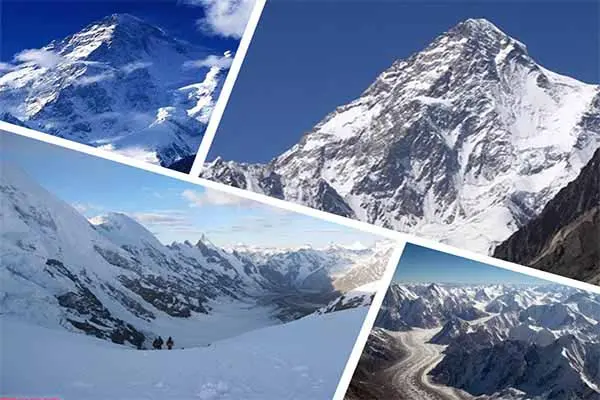
The Gondogoro La (5,585 m), between the Baltoro Glacier and the Hushe valley.
Laila Peak Base Camp trek: day by day
Our Laila Peak Base Camp Trek is the classic introduction to Hushe. This is how the days run:
- Days 1–3: arrival in Islamabad, flight to Skardu and a rest day for the first acclimatisation.
- Day 4: drive from Skardu via Khaplu to Hushe (about 3,150 m), about 5 hours.
- Day 5: trek to Saicho (about 3,350 m), a gentle walk along the river through fields and juniper.
- Day 6: trek to the Gondogoro summer huts (about 3,700 m), where herders bring their animals in summer.
- Day 7: trek to Dalchangpa, the base camp of Laila Peak (about 4,200 m), a green meadow below the peak.
- Day 8: trek to Khuspang (4,680 m) on the edge of the Gondogoro Glacier, the highest point of the trek.
- Days 9–10: back down to Saicho, then to Hushe and by road to Skardu.
- Days 11–13: flight to Islamabad, a spare day for weather, and departure.
Daily walks are about 4 to 6 hours, mostly on good trails, with one day on the glacier. It is a moderate trek: no pass and no climbing, but you should be fit and comfortable walking at altitude.
Weather in Hushe
There is no weather station in Hushe with published long-term records. The nearest official station is Skardu (about 2,230 m), where average highs reach about 31–32 °C in July and August and lows fall to about −8 °C in January. Hushe village is about 900 m higher, so it is usually around 5–6 °C cooler: expect warm days of roughly 25 °C and cool nights of around 10 °C in midsummer in the village, and much colder nights in the camps above 4,000 m. Afternoon clouds and short showers are common in July and August; September is often the clearest month.
Fitness and altitude
Hushe village is already at about 3,150 m, and most treks go to 4,200–4,700 m, with the Gondogoro La at 5,585 m. Take the first day in Skardu easy, drink plenty of water, and walk slowly on the way up. Our itineraries include rest days and climb gradually, so most people adjust well. Train before you come with long hill walks carrying a pack; for the Gondogoro La and the peaks, build up to days of 1,000 m of ascent.
Life in camp
On our treks a cook and kitchen team travel with the group. Mornings start with tea at the tent, breakfast and an early walk; lunch is often a packed lunch on the trail; and evenings end with soup, a hot dinner and tea in the dining tent. Porters from the valley carry the main loads, so you carry only a day pack. Camps are on meadows or moraines with water nearby, and there are toilet tents at each camp.
Combining Hushe with other trips
Hushe fits well into a longer journey in Baltistan. Spend a night in Khaplu on the way, at the palace or a hotel near the Shyok. Before or after the trek, visit the lakes, forts and deserts around Skardu: Shangrila, Upper Kachura, Shigar Fort and, in summer, the Deosai Plains. Trekkers with more time can link two treks in the same valley, for example the Machulo La viewpoint and Laila Peak Base Camp, or walk in from K2 over the Gondogoro La and spend a rest day in Hushe.
Photography tips
- Masherbrum is best seen early in the morning from above Hushe village, before clouds build on the summit.
- Laila Peak from Khuspang and Dalchangpa, in the first and last light of the day.
- The Gondogoro La at sunrise, with K2 and the Gasherbrums to the north.
- Village life: ask before photographing people, especially women, and respect a "no".
Best time to visit Hushe
- April and May: blossom in the lower valley and around Khaplu; the high trails are still snowy.
- June: the trekking season begins; green fields and fresh snow on the peaks.
- July and August: the main season for the Gondogoro La, Laila Peak and the high base camps; warm days, occasional rain.
- September: clear and settled weather, quieter trails, cold nights higher up.
- October to March: autumn colours in October, then a long, cold winter; most trekking stops.
Hushe in each season
- Spring brings blossom to the apricot trees of the lower villages and snow still lying on the high trails.
- Summer is the time of the herders: families take their animals up to the pastures of the Gondogoro and Masherbrum valleys, and the treks are open.
- Autumn colours the poplars and willows gold, the harvest comes in, and the last expeditions walk out over the Gondogoro La.
- Winter closes the valley in snow and cold; the village goes quiet until spring.
Where to stay in Hushe
Hushe village has simple guesthouses with basic rooms and meals cooked by local families, and there are campsites at the edge of the village and along the trekking routes. On our trips we use both, depending on the season and the size of the group. On the treks we camp, with our own tents, cook and kitchen team. In Khaplu there are hotels of every level, including the restored Khaplu Palace.
What to bring
- Good trekking boots, trekking poles and a waterproof jacket.
- Warm layers and a down jacket for evenings and camps above 4,000 m.
- Sun cream, sunglasses and a sun hat: the sun is strong at altitude.
- A water bottle and purification tablets or a filter.
- Cash in Pakistani rupees: there are no banks or ATMs in Hushe.
- For the Gondogoro La: crampons or microspikes, a harness and a helmet (provided on our trips).
Permits
You do not need a special permit to visit Hushe village. Treks in the area differ: the Gondogoro La and some routes near the border need a trekking permit, arranged through a licensed company, while the Nangma valley needs no permit. We arrange all permits for our trips. You also need a Pakistan visa, which you apply for online at visa.nadra.gov.pk.
A short history of the valley
Hushe has been a farming and herding village for centuries, part of the old kingdom of Khaplu. The first mountaineering expeditions arrived in the 20th century, drawn by Masherbrum, which was mapped as "K1" during the Great Trigonometrical Survey because it was the first Karakoram peak the surveyors measured. Since then climbers and trekkers have come every summer, and the village has become a centre of mountain work in Baltistan, while keeping its Balti traditions.
Travelling responsibly in Hushe
Hushe is a small community, and its fields and pastures are its living. Stay on paths through the fields, ask before photographing people (especially women), dress modestly, and take all your rubbish back to Skardu. Buy local food and handicrafts where you can, and use local guides and porters. On our trips we employ local staff from the Hushe valley and bring all our waste back from the mountains.
Sample plans
- 4–5 days from Skardu: drive to Hushe, walk to Saicho and the Gondogoro huts, and back; visit Khaplu on the way.
- 10–13 days from Islamabad: the Nangma valley (Nangma Valley Trek), the Machulo La (Machulo La K2 Viewpoint Trek) or Laila Peak Base Camp and Khuspang (Laila Peak Base Camp Trek).
- 3 weeks: K2 Base Camp and the Gondogoro La, ending in Hushe (K2 and Gondogoro La Trek).
Frequently asked questions
Where is Hushe Valley?
In the Ghanche District of Gilgit-Baltistan, northern Pakistan. The valley runs north from the Shyok River opposite Khaplu towards Masherbrum (7,821 m), in the Karakoram.
How do I get to Hushe Valley?
Fly from Islamabad to Skardu (about 1 hour, weather permitting), then drive about 130 km east via Khaplu to Hushe village, roughly 5 hours by jeep.
Are there flights to Hushe?
No. Hushe has no airport. The nearest airport is Skardu, about 130 km away by road. In bad weather, when flights are cancelled, the alternative is the two-day road journey from Islamabad to Skardu.
How high is Hushe village?
About 3,150 m. It is the last and highest village of the valley and the starting point for most treks.
How far is Hushe from Skardu?
About 130 km by road, around 5 hours by jeep: east along the Indus and Shyok rivers to Khaplu, then north up the Hushe valley.
How far is Hushe from Khaplu?
About 37 km by road from Khaplu, across the Shyok River and north up the valley, about 1.5 to 2 hours by jeep.
What is Hushe Valley famous for?
Its mountains: Masherbrum (7,821 m), K6, Laila Peak and the granite towers of the Charakusa and Nangma valleys. It is also the exit of the Gondogoro La trek from K2.
Which treks start in Hushe?
Laila Peak Base Camp and Khuspang, the Gondogoro valley, Masherbrum Base Camp, Charakusa (K6 and K7 base camp) and Aling. Nangma starts at Kanday and Machulo La at Machulo, lower down the valley.
Do I need a permit for Hushe Valley?
Visiting Hushe village does not need a special permit. Some treks need a trekking permit, for example the Gondogoro La; others, such as Nangma, do not. We arrange permits for our trips.
What is the best time to visit Hushe?
June to September for treks; July and August for the Gondogoro La. Spring (April and May) is good for the lower valley and Khaplu. Winter is cold and snowy.
Where do you stay in Hushe?
There are simple guesthouses in Hushe village, and many groups camp. On our trips we use both, depending on the season and the group.
Is Laila Peak in Hushe Valley?
Yes. Laila Peak (6,096 m) stands above the Gondogoro Glacier at the head of the Hushe valley. Its base camp at Dalchangpa is about two days' walk from Hushe village.
Can I see K2 from Hushe?
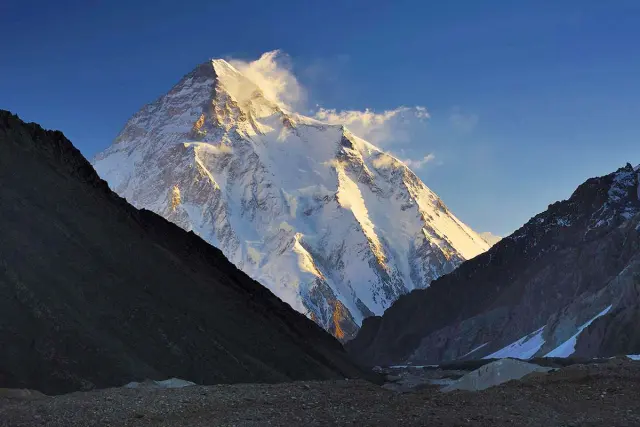
Not from the village. From the Gondogoro La (5,585 m) you see K2, Broad Peak and the Gasherbrums, and the Machulo La viewpoint (about 4,700 m) near Khaplu also has a view of K2.
Is Hushe Valley good for beginners?
Yes for the lower treks: the walk to Saicho and the Gondogoro huts, or the Nangma valley, are suitable for fit beginners. Khuspang, the Gondogoro La and the peaks need more experience.
Who lives in Hushe?
Balti people, who speak Balti, a language related to Tibetan. Many families farm and keep animals, and many men work as porters, cooks and guides on treks and expeditions.
How long is the trek from Hushe to Laila Peak Base Camp?
Three days of walking: Hushe to Saicho, Saicho to the Gondogoro huts, and on to Dalchangpa, the base camp, at about 4,200 m. Khuspang is one more day above it.
Is there mobile signal in Hushe?
Signal is limited in the upper valley and absent on most trails. Expect to be out of contact on the treks; our guides carry the means to call for help.
Can I visit Hushe in winter?
The road is usually passable, but winters are very cold and snowy, many guesthouses close, and the treks are not possible. The best time is June to September.
Is Masherbrum the same as K1?
Yes. Masherbrum (7,821 m) was the first Karakoram peak mapped by the 19th-century survey, so it was named K1; K2 was the second.
How many days do I need for Hushe?
At least 4 or 5 days from Skardu for a short walk towards Saicho and the Gondogoro huts; 10 to 13 days from Islamabad for Nangma, the Machulo La or Laila Peak Base Camp.
What is the difference between Hushe and Nangma?
Both are in the Ghanche district. Hushe is the main valley up to Masherbrum and the Gondogoro Glacier; Nangma is a side valley reached from Kanday, known for its granite walls and big-wall climbing.
About the author
Imtiyaz Ahmed Shigri founded Chogori Adventure in Skardu in 2015. Our guides are local, government-licensed and English-speaking, and most of them are trained in first aid. We are licensed by the Department of Tourist Services (licence no. 2494) and the Gilgit-Baltistan tourism department (licence DTS-GB-055), and we are a member of the Pakistan Association of Tour Operators, with offices in Skardu and Islamabad.
Rated 4.9 out of 5 from 47 reviews on Google (November 2026). Read our reviews on Google