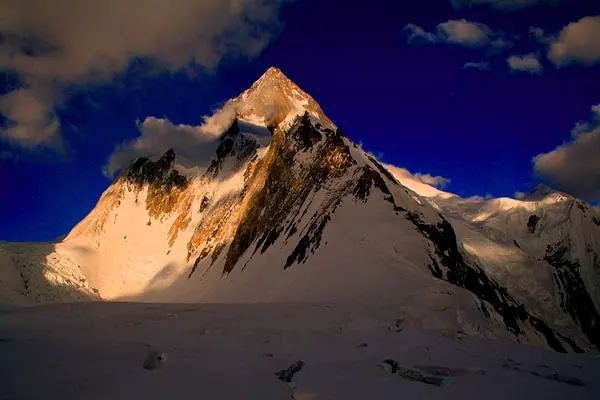
Shatong Peak Climb from Deosai (5,404 m)
- Gilgit-Baltistan, Pakistan
Share
from
$1,900
Book now
- Duration
- 10 Days
- Difficulty
- Challenging
- Max Altitude
- 5,404 m / 17,730 ft
- Best Time
- Jun–Oct
- Group Size
- 4–10 people
- Trip Type
- Expedition
Overview
Shatong Peak Climb 2027: 5,404 m from Deosai
The Shatong Peak climb takes you to the top of Shatong (also written Shatung, 5,404 m), the highest summit on the ridges east of the Deosai plateau in Gilgit-Baltistan, Pakistan. Our 10-day private trip runs from Islamabad back to Islamabad: we fly to Skardu, drive over Deosai and the Dapa jeep track, walk two days to a high camp at 4,798 m and climb the last 606 m on summit day. It is a challenging trekking peak with a short steep top section, best from mid-July to mid-September (possible late June to the end of October), from $1,900 per person for 2–4 people.
This plan is short and has no spare day. Bad weather or slow acclimatization can shorten the summit attempt or stop it. Read the section on acclimatization before you book.
The climb in numbers
- Length: 10 days from Islamabad back to Islamabad, with 4 days on foot (Days 5–8).
- Summit: 5,404 m, checked on SRTM elevation data.
- Heights: Islamabad 540 m; Skardu 2,230 m; Ali Malik Mar 4,123 m; Dapa track crest 4,562 m; jeep end 3,744 m; Base Camp 4,466 m; High Camp 4,798 m.
- Summit day: about 2.5 km and +606 m from High Camp, 8–10 hours there and back down to Base Camp.
- Grade: Alpine F/PD trekking peak: scree, snow and a steeper last section with a fixed rope if it is icy.
- Season: late June to the end of October, when the Deosai road is open; best mid-July to mid-September.
- Group: private only, on any date in the season, 1 to 10 climbers.
- Price: from $1,900 per person for 2–4 people, all permits and fees included.
Who the Shatong Peak climb suits
The Shatong Peak climb suits fit trekkers who want a first real summit above 5,000 m and who have already walked above 4,500 m. It is the first peak we suggest to people who are new to climbing, but the short plan makes it a step up from a trek.
- Fitness: you should walk 5–6 hours a day with a day pack, and manage one long summit day of 8–10 hours that starts at about 2 a.m.
- Experience: an earlier trek to at least 4,500 m, ideally in the last few months. You do not need to be a climber; your guide refreshes crampon, ice axe and fixed-rope skills in Skardu.
- Time: 10 days from Islamabad, so it fits a short holiday or follows another trek.
- Group: private trips for 1 to 10 climbers, on the dates you choose.
Who should pick another of our trips:
- If you have never been above 4,000 m, choose a trek first, or ask us to add rest days to this climb.
- If you want a 6,000 m summit, see our Khosar Gang Expedition or the Shimshal Pass trek and Minglik Sar climb.
How hard the Shatong Peak climb is
Shatong is a challenging trekking peak: Alpine grade F/PD, with scree and snow on a slope of about 30% and a steeper last 150 m. There is no long glacier and no technical rock climbing, but you wear crampons and a harness near the top.
- To Base Camp: about 11 km up a wide grassy valley with a stream, +730 m, 5–6 hours.
- To High Camp: about 3.7 km, +330 m, 2–3 hours on moraine and scree.
- Summit day: 4–5 hours up the north-west slope, then 4–5 hours down to High Camp and on to Base Camp, a descent of about 940 m.
- Top section: steeper snow or broken rock. If it is icy, the guide fixes a rope, and you climb it with a jumar (ascender).
In early summer there is more snow on the slope; by September it is mostly scree. We start in the dark while the slopes are frozen, which keeps stones in place and gives the best views. Your guide sets a turn-around time, and the decision to go on or turn back is made on the mountain, by consensus between the climbers and our team. We do not sell a summit: the weather, the snow and your condition decide it.
Acclimatization on a 10-day plan
This is a fast plan: you sleep at 3,744 m on Day 4, at 4,466 m on Day 5 and at 4,798 m on Day 6, and go for the top on Day 7. The usual advice above 3,000 m is to raise your sleeping height by only 300–500 m a night, and the jump from Skardu to the jeep end is about 1,500 m in one day, by jeep.
- What helps: a walk and a night in Skardu, the slow pace on the trek, an afternoon walk above High Camp, plenty of water and an early night.
- What it means for you: come fit and, if you can, recently acclimatized from another trek above 4,000 m.
- If someone is unwell: your guide watches for signs of altitude sickness and takes the person down. The rest of the group may still climb if there are enough staff.
- No spare day: there is no weather day on the mountain. A storm on Day 7 can mean a shorter attempt or no summit.
Because every trip is private, you can add a rest day at Base Camp or a weather day. This raises the chance of the summit; ask us for the price of the extra days.
Best time for the Shatong Peak climb
Climb between mid-July and mid-September; the season runs from late June to the end of October, when the Deosai road is open. Outside this window the road over Deosai is closed by snow.
- Late June and early July: more snow on the summit slope and wet ground on the plateau.
- Mid-July to mid-September: the best months, with firm ground, long days and wildflowers on Deosai until about mid-September. Afternoon storms and hail are common in August, so we summit early in the morning.
- October: clear but cold. Nights at Base Camp are well below freezing, snow on the top section is harder, and the days are shorter.
Day plan summary
Two days to Skardu and the plateau, two days to High Camp, one summit day and three days back to Islamabad.
- Days 1–3: Islamabad, flight to Skardu, then a day in Skardu with a walk at Sadpara Lake (2,635 m) and a gear and rope check.
- Day 4: jeep up past Sadpara and Ali Malik Mar (4,123 m) onto Deosai, then east on the Dapa track over a crest at 4,562 m and down to the jeep end (3,744 m).
- Days 5–6: walk to Base Camp (4,466 m), then to High Camp (4,798 m).
- Day 7: summit (5,404 m) and back to Base Camp.
- Days 8–10: walk out and drive over Deosai to Skardu, fly to Islamabad, fly home.
The full day-by-day plan is in the itinerary below.
A typical day on the climb
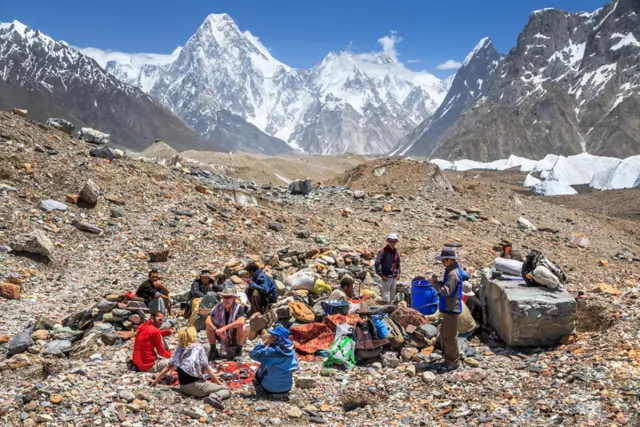
On the walking days you carry a day pack, and porters carry the camp and your bag. Our cook and kitchen team prepare breakfast, lunch and dinner every day from Skardu onward.
- Camp: tents with mattresses, twin sharing, plus a mess tent and a toilet tent.
- On the way: boiled water, snacks and dried fruit every day.
- Your team: a licensed guide, climbing guides for summit day, a cook and porters.
- Contact: there is no phone signal at the camps; your guide carries a satellite phone.
From the summit, on a clear morning, you look north across the Karakoram to K2, Broad Peak, the Gasherbrums and Masherbrum, and west to Nanga Parbat. On the plateau, look out for marmots; Deosai National Park also protects the Himalayan brown bear.
Shatong Peak Climb Cost
The Shatong Peak climb costs $1,900 per person for a private group of 2–4 people, from Islamabad back to Islamabad. The price per person depends on the size of your group:
| Group size | Price per person |
|---|---|
| 1 person (solo) | $2,200 |
| 2–4 people | $1,900 |
| 5–8 people | $1,800 |
| 9–10 people | $1,700 |
All prices are in US dollars (USD), or the equivalent in Pakistani rupees (PKR) on the day you pay.
What the price covers
- Return flights Islamabad–Skardu (by road if a flight is cancelled) and airport transfers.
- Jeeps from Skardu over Deosai to the Dapa valley and back.
- Hotels in Islamabad (1 night at the start, 1 at the end) and Skardu (2 nights in, 1 out), twin sharing.
- All meals outside Islamabad, tents and camp equipment.
- A licensed guide, climbing guides, a cook, kitchen staff and porters.
- Climbing gear: ice axe, crampons, harness, helmet and the fixed rope.
- All permits and park/community fees, including the Deosai National Park entry.
What you pay yourself
- International flights, the Pakistan visa fee, meals in Islamabad, travel insurance and tips.
- Mountaineering boots, warm clothing and other personal gear.
- Extra hotel nights, meals and road costs if a flight is cancelled, and any extra days you add.
Permits for the Shatong Peak climb
Shatong Peak is below 6,500 m, so no climbing royalty and no liaison officer are needed. It lies in an open zone on the Deosai side of Baltistan. We arrange the trekking permit, the environment fee and the Deosai National Park entry; all permits and park/community fees are included in the price. You need a valid Pakistan visa: see our Pakistan visa guide.
Getting to Shatong Peak
Fly from Islamabad to Skardu in about 1 hour, then drive south up the Sadpara road onto the Deosai plateau. At Ali Malik Mar (4,123 m) the road reaches the plateau. A jeep track then runs east over a crest at 4,562 m, past the Katicho pastures (4,171 m), and down into the Dapa valley, where the jeeps stop at 3,744 m. From there the walk to Base Camp goes south up the main valley.
Flights depend on the weather. If a flight is cancelled, we drive on the Karakoram Highway, which takes about 2 days. As this plan has no spare day, a cancelled flight to Skardu shortens the time on the mountain, and a cancelled flight back can make you miss your flight home. We suggest a flexible ticket home or an extra night in Islamabad. For more travel tips, see Plan Your Trip.
How it compares with our other trekking peaks
Shatong is the shortest of our climbs and the only one from the Deosai side. If you want more height or more days, compare these trips:
- Khosar Gang Expedition (6,046 m): a first 6,000 m peak above the Shigar valley, with a steep snow wall on fixed ropes. Choose it after Shatong, or if you already climb on snow.
- Shimshal Pass trek and Minglik Sar climb (about 6,050 m): a 20-day trip by road through Hunza to Shimshal, with a slow climb from the pass. Choose it if you have three weeks.
- Gondogoro Peak: a harder peak above the Hushe valley, with a summit day that starts at midnight.
For an overview, read our guide to the top five trekking peaks in Pakistan, or browse all 5,000 m peaks and 6,000 m peaks in Pakistan.
Please note: several summits on these ridges carry the name Shatong or Shatung. Our climb goes to the highest of them, 5,404 m. A lower top of about 5,270 m lies 7 km to the west-north-west, so check the height when you compare trips.
Related Tours
(Tours You May Like)
| Tour | Price (USD) |
|---|---|
| Gondogoro Peak Climbing Expedition—23 Days | $4,000 |
| Khosar Gang Expedition—12 Days | $2,100 |
| Skardu Tour Packages—7 Days | $330 |
| Laila Peak Expedition—22 Days | $2,400 |
| Amin Brakk Expedition—29 Days | $2,400 |
How to book this trip
-
Choose a date
This trip runs as a private tour: choose the start date that suits you in the booking form.
-
Send your details
Fill in the booking form with your name, email and group size.
-
Pay the 10% advance deposit
The deposit holds your place on the trip.
-
We confirm your booking
Once the deposit arrives, we confirm and start booking your hotels and arrangements.
-
Pay the balance
By bank transfer two weeks before you arrive, or bring cash to Islamabad.
Highlights
- The summit of Shatong Peak (5,404 m), the highest top east of Deosai.
- Views to K2, Broad Peak, the Gasherbrums and Nanga Parbat on a clear morning.
- A jeep drive across the Deosai plateau and over a 4,562 m crest.
- A quiet camp at 4,798 m below the summit slope.
- Climbing gear, fixed rope and climbing guides included.
- Private only, any date from late June to the end of October.
Itinerary
Day 1: Arrival in Islamabad
Islamabad · 540 m (1,772 ft)
Our staff meet you at Islamabad International Airport and take you to the hotel (540 m). In the evening your guide explains the climb and checks your boots and clothing.
- Accommodation: Hotel in Islamabad (twin sharing).
- Meals: Not included in Islamabad.
Day 2: Fly to Skardu
Skardu · 2,230 m (7,316 ft)
A morning flight of about 1 hour along the mountains to Skardu (2,230 m), with Nanga Parbat in view on a clear day. If the flight is cancelled, we drive on the Karakoram Highway; as there is no spare day, this shortens the time on the mountain.
- Accommodation: Hotel in Skardu (twin sharing).
- Meals: Lunch and dinner included.
Day 3: Skardu: Acclimatization and Gear Check
Sadpara Lake · 2,635 m (8,645 ft)
A walk at Sadpara Lake (2,635 m) to help your body adjust. Back in Skardu, your guide checks the climbing gear and refreshes crampon, ice axe and fixed-rope skills while we complete the permits. Night in Skardu (2,230 m).
- Walking: 2–3 hours.
- Accommodation: Hotel in Skardu (twin sharing).
- Meals: Breakfast, lunch and dinner included.
Day 4: Drive over Deosai to the Dapa Valley
Dapa track crest · 4,562 m (14,967 ft)
The jeep climbs past Sadpara village to Ali Malik Mar (4,123 m) and onto the Deosai plateau, where we enter Deosai National Park. We turn east on the Dapa jeep track, cross the crest at 4,562 m, pass the Katicho pastures (4,171 m) and go down into the Dapa valley to the jeep end. A short evening walk up the valley helps with the height. Night in camp at the jeep end (3,744 m). Drive: 5–6 hours.
- Walking: 1 hour.
- Accommodation: Tents (twin sharing).
- Meals: Breakfast, lunch and dinner included.
Day 5: Trek to Shatong Base Camp
Shatong Base Camp · 4,466 m (14,652 ft)
We walk south up the wide main valley beside the stream, on grass and stony ground, while porters carry the loads. Base Camp is on the flat valley floor at 4,466 m. Walk slowly and drink plenty of water.
- Walking: About 11 km, +730 m, 5–6 hours.
- Accommodation: Tents (twin sharing).
- Meals: Breakfast, lunch and dinner included.
Day 6: Trek to High Camp
Shatong High Camp · 4,798 m (15,741 ft)
A short climb on moraine and scree to the head of the upper basin. In the afternoon a short walk above camp helps acclimatization and shows you the summit slope. Early dinner and early night at High Camp (4,798 m).
- Walking: About 3.7 km, +330 m, 2–3 hours.
- Accommodation: Tents (twin sharing).
- Meals: Breakfast, lunch and dinner included.
Day 7: Summit Day, Shatong Peak (5,404 m)
Shatong Peak · 5,404 m (17,730 ft)
We start at about 2–3 a.m. and climb scree and snow on the north-west slope, then the steeper top section, with a fixed rope if it is icy. From the top, on a clear morning, you see K2, Broad Peak, the Gasherbrums, Masherbrum and Nanga Parbat. We go down to High Camp and on to Base Camp (4,466 m). There is no spare day, so bad weather can shorten the attempt.
- Walking: About 2.5 km and +606 m up, then −940 m down; 8–10 hours.
- Accommodation: Tents (twin sharing).
- Meals: Breakfast, lunch and dinner included.
Day 8: Walk Out and Drive to Skardu
Dapa track crest · 4,562 m (14,967 ft)
We walk down the valley to the jeep end, then drive back over the 4,562 m crest, across Deosai and down via Sadpara to Skardu (2,230 m). It is a long day. Drive: 5–6 hours.
- Walking: About 11 km, 3–4 hours.
- Accommodation: Hotel in Skardu (twin sharing).
- Meals: Breakfast, lunch and dinner included.
Day 9: Fly to Islamabad
Islamabad · 540 m (1,772 ft)
Morning flight to Islamabad (about 1 hour, weather permitting). If the flight is cancelled, we drive on the Karakoram Highway, which takes about 2 days. Night in Islamabad (540 m).
- Accommodation: Hotel in Islamabad (twin sharing).
- Meals: Breakfast in Skardu included; meals in Islamabad not included.
Day 10: Departure
Islamabad · 540 m (1,772 ft)
Transfer to Islamabad International Airport for your flight home.
- Accommodation: None.
- Meals: Not included in Islamabad.
1,000
2,000
3,000
4,000
5,000
5,404 m
- Sadpara Lake 2,635 m
- Dapa track crest 4,562 m
- Shatong Base Camp 4,466 m
- Shatong High Camp 4,798 m
- Shatong Peak 5,404 m
Islamabad
Islamabad
What's included in the price
This trip runs as a private tour. Here is what the price covers, and what it does not.
Facilities
- Food
- Transportation
- Hotel Stays
- Airport Pick & Drop
- Guiding
Included in the price
- Islamabad–Skardu return flights (by road if a flight is cancelled) and airport transfers
- Jeeps from Skardu over Deosai and the Dapa track to the jeep end and back
- Hotels: Islamabad 1 night at the start and 1 at the end, Skardu 2 nights in and 1 out (twin sharing)
- All meals outside Islamabad
- Tents with mattresses (twin sharing), mess tent and toilet tent
- A licensed guide, climbing guides on summit day, a cook and kitchen staff
- Porters for the camp and your personal luggage
- Climbing gear: ice axe, crampons, harness, helmet and fixed rope
- All permits and park/community fees, including the trekking permit, environment fee and Deosai National Park entry (there is no peak royalty)
- Satellite phone and first-aid kit for emergencies
Not included
- International flights and the Pakistan visa fee
- Meals in Islamabad
- Travel insurance covering climbing to 5,500 m, medical evacuation and helicopter rescue
- Mountaineering boots, personal clothing and personal gear
- Tips for the guide, cook, kitchen staff and porters
- Extra hotel nights, meals and road transport if a flight is cancelled
- Extra rest or weather days added on request
- Extra costs if you or your group return early, for any reason (our services are provided as listed in the trip plan)
- Anything not listed under included
Why choose Chogori Adventure
-
Native Company
Authentic journeys, local expertise.
-
Senior Guides
Expert-led journeys crafted with wisdom and a personal touch.
-
Clear Pricing
What's included is listed on each trip.
Resources
Free guides from our local team, so you arrive ready.
FAQs
How high is Shatong Peak?
5,404 m, from SRTM elevation data. Some maps give 5,397 m or 5,400 m. A lower top of about 5,270 m, 7 km to the west-north-west, is also called Shatong or Shatung; our climb goes to the higher summit.
Where is Shatong Peak?
On the ridges east of the Deosai plateau, south of Skardu, in Baltistan, Gilgit-Baltistan, in the north of Pakistan. We reach it from the Deosai road and the Dapa valley.
How difficult is the Shatong Peak climb?
It is a challenging trekking peak, Alpine grade F/PD. You walk on scree and snow and climb a steeper top section with crampons, often on a fixed rope. Summit day takes 8–10 hours from High Camp back to Base Camp.
Is Shatong Peak good for beginners?
It is the first peak we suggest to people who are new to climbing, but you should have trekked to at least 4,500 m before. Your guide teaches crampon and fixed-rope skills in Skardu. The 10-day plan is fast, so recent time at altitude helps.
How long is the Shatong Peak climb?
10 days from Islamabad back to Islamabad, with 4 days on foot. There is no spare day, so on a private trip you can add a rest or weather day at extra cost.
When is the best time to climb Shatong Peak?
Mid-July to mid-September. The season runs from late June to the end of October, when the Deosai road is open. Early summer has more snow on the slope; October is cold.
How much does the Shatong Peak climb cost?
$1,900 per person for 2–4 people, $2,200 solo, $1,800 for 5–8 and $1,700 for 9–10, from Islamabad. All prices are in US dollars (USD), or the equivalent in Pakistani rupees (PKR) on the day you pay.
Is climbing gear included?
Yes. The ice axe, crampons, harness, helmet and fixed rope are included. Bring your own mountaineering boots that fit crampons, warm clothing and gloves.
Do I need a permit to climb Shatong Peak?
Shatong is below 6,500 m, so there is no climbing royalty and no liaison officer. We arrange the trekking permit, the environment fee and the Deosai National Park entry; all permits and park/community fees are included.
What happens if the weather is bad on summit day?
This plan has no spare day. If a storm comes on Day 7, the guide may shorten the attempt or turn back, and the summit is not reached. Adding a weather day to your private trip raises the chance of the top.
How do you get to Shatong Peak Base Camp?
Fly to Skardu, drive over Deosai and the Dapa jeep track to the jeep end (3,744 m), then walk about 11 km, 5–6 hours, to Base Camp at 4,466 m.
What can I see from the summit of Shatong Peak?
On a clear morning, K2, Broad Peak, the Gasherbrums and Masherbrum to the north, Nanga Parbat to the west, and the Deosai plateau below.
What insurance do I need?
Travel insurance that covers trekking and climbing to 5,500 m, medical evacuation and helicopter rescue.
What happens if I return early from the climb?
Extra costs of returning early, for you or your group and for any reason, are not covered. Our services are provided as listed in the trip plan.
Reviews
No Review
You might also like