
A native trekking and expedition company from Skardu and Islamabad leading K2, Karakoram and Hunza trips with local guides.
Founded 2015 Licensed: DTS no. 2494 and DTS-GB-055 Member of PATO 4.9/5 from 47 Google reviews

Mountaineering expeditions in Pakistan, from 5,000 m climbs to K2 and the other 8,000 m peaks of the Karakoram, with permits and logistics from Skardu.
15 trips found
Showing 1–12 of 15 trips
We run 15 climbing expeditions in Pakistan, from a 12-day climb of Khosar Gang (6,046 m) to a 60-day expedition on Gasherbrum I and II, priced from $2,100 to $12,000 per person in USD or the equivalent in PKR. Most climbs run between June and October, with up to 10 climbers in a group. The peaks of Pakistan range from granite towers of 5,000 m to K2 at 8,611 m, so we group our trips by height.
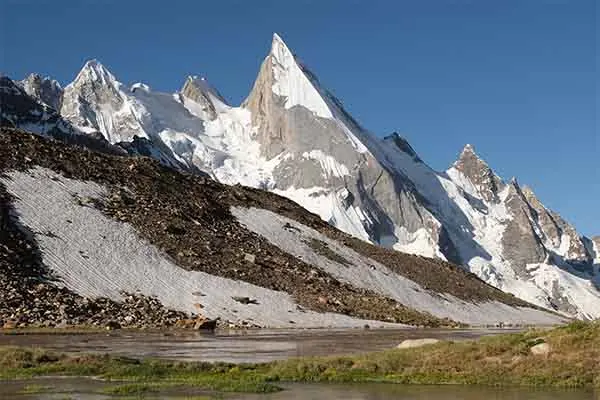
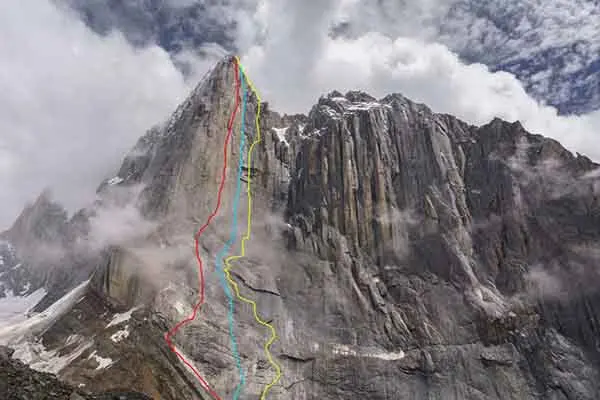
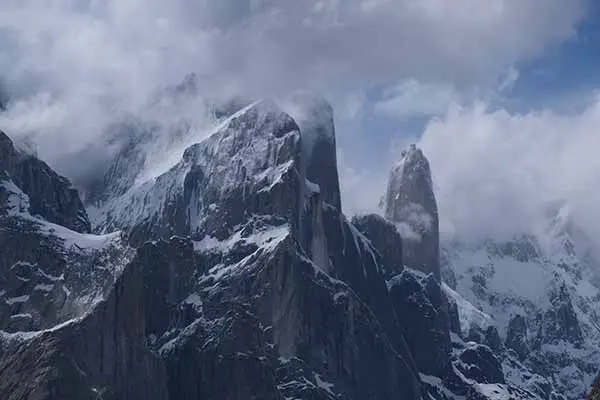
Most climbers gain height over several seasons. A first summit is often Gondogoro Peak (5,650 m), climbed after the K2 Base Camp trek, or Khosar Gang, which needs an earlier trek to 4,000 m. Laila Peak asks for a 5,000 m summit and steep snow and ice skills. The Spantik Expedition is the usual next goal, once you have climbed a 6,000 m peak on crampons and fixed ropes. For the K2 Climbing Expedition and the other 8,000 m peaks, you should have at least one 7,000 m peak behind you. Teams with their own rock skills come for the Trango Towers and Amin Brakk, and alpinists for remote Koyo Zom in the Hindu Raj.
Every expedition includes permits, government fees and national park fees, and any peak royalty that applies; Amin Brakk and Koyo Zom need no climbing permit at all. Many trips are base camp services: we arrange the travel, hotels, porters, the approach trek, the cook and kitchen team and base camp, and your team climbs on its own. Khosar Gang and Gondogoro Peak also include climbing gear and one high-altitude porter for every two climbers. On the 8,000 m peaks you choose Base Camp Only or Full Board. Our native Karakoram team works from our office in Skardu, under Department of Tourist Services licence 2494 and Gilgit-Baltistan licence DTS-GB-055.
Our 8,000 m departures start on 20 June, and the best summit window runs to 8 August. Spantik runs from July to early September. The 6,000 m peaks and rock walls run from June to October, with July and August the most settled months on the high snow peaks. Private expeditions can be arranged on other dates.
| Trip | Duration | Difficulty | Best time | From |
|---|---|---|---|---|
| Khosar Gang Expedition | 12 days | Challenging | Jul–Oct | $2,100 |
| Gangchan Peak Expedition | 18 days | Expert | Jun–Oct | $2,100 |
| Laila Peak Expedition | 22 days | Expert | Jul–Aug | $2,400 |
| Gondogoro Peak Climbing Expedition | 23 days | Difficult | Jul–Sep | $4,000 |
| Pastore Peak Climbing Expedition | 25 days | Expert | Jun–Oct | $4,000 |
| K2 Base Camp and Khosar Gang Expedition | 27 days | Difficult | – | $4,000 |
| Koyo Zom Expedition | 28 days | Expert | Jul–Sep | $5,000 |
| Spantik Expedition | 28 days | Difficult | Jul–Sep | $6,050 |
| Amin Brakk Expedition | 29 days | Expert | Jun–Oct | $2,400 |
| Trango Tower Expedition | 35 days | Expert | Jun–Oct | $2,400 |
| Gasherbrum II Expedition | 50 days | Expert | Jun–Aug | $10,000 |
| Gasherbrum I Expedition | 50 days | Expert | Jun–Aug | $10,000 |
| Broad Peak Climbing Expedition | 50 days | Expert | Jun–Aug | $10,000 |
| K2 Climbing Expedition | 50 days | Expert | Jun–Aug | $12,000 |
| Gasherbrum I and II Expedition | 60 days | Expert | Jun–Aug | $12,000 |
Prices per person in USD or the equivalent in PKR. Private trips on your own dates are also possible.
For most peaks, yes: a climbing permit, and on many peaks a royalty, applied for through a licensed operator. We arrange it and include it in the price, together with government and park fees. Some peaks, such as Amin Brakk and Koyo Zom, need no climbing permit. For peaks in the K2 area you also need your original passport for the security clearance.
Our expeditions cost from $2,100 per person for Khosar Gang to $12,000 for K2 with Base Camp Only, or $26,000 with Full Board. Spantik is $6,050, and most 6,000 m peaks cost $2,100 to $5,000. Prices are in USD or the equivalent in PKR. Insurance, personal climbing gear and the extra costs of leaving early are not included.
Summer. On the 8,000 m peaks the best window is from 20 June to 8 August. Spantik is climbed from July to early September, and the 6,000 m peaks and rock walls from June to October. Outside these months, deep snow, cold and short days make most climbs much harder, though private expeditions can be arranged.
It depends on the height. Khosar Gang and Gondogoro Peak need an earlier trek to at least 4,000 m and good fitness. Laila Peak needs a 5,000 m summit, and Spantik a 6,000 m peak with crampons and fixed ropes. For K2 you need at least one 7,000 m peak. Trango, Amin Brakk and Koyo Zom are for teams who already climb technical routes on their own.
Everything up to and at base camp: transport, flights to Skardu where the route uses them, hotels in Islamabad and Skardu, porters for all expedition loads, the approach trek, a cook and kitchen team, tents and all meals on the trek and at base camp, and a satellite phone for emergencies. Nothing above base camp is included, so your team climbs with its own gear and skills.
Up to 10 climbers. Our 8,000 m expeditions take 3 to 10, and our other expeditions take 4 to 10, on a fixed departure or as a private team. Where high-altitude porters are included, there is one for every two climbers. Private expedition prices stop at 10 people, our largest expedition team.
Khosar Gang (6,046 m) and Gondogoro Peak (5,650 m) are good first summits: both include climbing gear and high-altitude porters, and both need only an earlier trek to 4,000 m and good fitness. Khosar Gang takes 12 days from Islamabad; Gondogoro Peak adds the climb to the K2 and Gondogoro La trek. Our guide to the top five trekking peaks compares more options.
Thoughtful thoughts to your inbox
A native trekking and expedition company from Skardu and Islamabad leading K2, Karakoram and Hunza trips with local guides.
Founded 2015 Licensed: DTS no. 2494 and DTS-GB-055 Member of PATO 4.9/5 from 47 Google reviews
Your reports and suggestions are important to us webmaster@chogoriadventure.com
We would like to use cookies for visitor statistics (Google Analytics) and for the video on our home page. They load only if you accept.
You can change your choice at any time under “Cookie settings” at the bottom of every page.